Cart
0





A roadside stop can turn unpredictable fast. Between moving traffic, low light, bad weather, distracted drivers, and tight shoulder space, traffic safety gear for police is not a secondary purchase. It is part of the job, and when it fails, officers feel it immediately in visibility, control, and response time.
The right setup does more than make an officer easier to see. It helps establish authority at the scene, gives drivers clear direction, and reduces confusion during everything from crash response to DUI checkpoints to lane closures. That means choosing gear based on real duty conditions, not just on what looks good in a catalog.
What traffic safety gear for police needs to do
On paper, most traffic gear seems straightforward. In the field, the differences show up quickly. A reflective vest that rides up over a duty belt becomes a distraction. A traffic wand with weak output loses effectiveness in rain or fog. Cones that are too light shift or tip when trucks pass. Small details become operational problems.
For police work, traffic safety gear has to do three things well. First, it needs to improve visibility in the environments officers actually work in, whether that is daylight glare, nighttime traffic, or storm conditions. Second, it needs to support scene management by helping officers direct vehicles and pedestrians clearly. Third, it has to hold up under repeated deployment, storage in a patrol vehicle, and exposure to heat, moisture, and grime.
That sounds simple, but there is always a trade-off. Lighter gear is easier to carry and deploy, but heavier gear often stays put better and lasts longer. High-visibility equipment improves safety, but it also has to work around body armor, radios, firearm access, and the rest of a duty setup.
High-visibility apparel is the first layer
If there is one category that does the most immediate work, it is high-visibility apparel. Reflective vests, jackets, rainwear, and outer layers are often the first items officers reach for when stepping into an active roadway.
The biggest mistake buyers make is treating visibility gear as one-size-fits-all. Patrol traffic units, supervisors, motor officers, deputies working rural highways, and officers handling urban crash scenes may all need different cuts and configurations. A vest worn over a standard uniform is one thing. A vest that must fit over armor, outer carriers, and winter layers is another.
A good traffic vest for law enforcement should offer bright daytime visibility and strong reflective performance at night, but it also has to leave room for movement and access. Officers still need to reach critical gear, move quickly, and maintain a professional presence. If the vest snags, shifts, or blocks equipment, compliance drops and the gear ends up staying in the trunk.
Weather matters too. In South Florida and other hot, humid environments, breathable materials and lighter-weight designs matter more than they might in cooler regions. In heavy rain, a high-visibility shell or jacket may be the better option, but it has to avoid becoming bulky or restrictive. There is no universal best choice. The right pick depends on climate, assignment, and how often the gear is actually worn.
Lights and signaling tools control attention
Visibility alone does not direct traffic. Officers also need signaling tools that cut through driver distraction and communicate fast. Flashlights, traffic wands, illuminated batons, and scene lights all play a role here.
Traffic wands are especially useful during nighttime vehicle stops, intersections with failed signals, parking lot management, and temporary traffic diversions. The best options are bright enough to be seen clearly without being awkward to carry or slow to activate. Simple controls matter. When an officer is already managing radio traffic, vehicles, and scene safety, no one wants to fight with a complicated device.
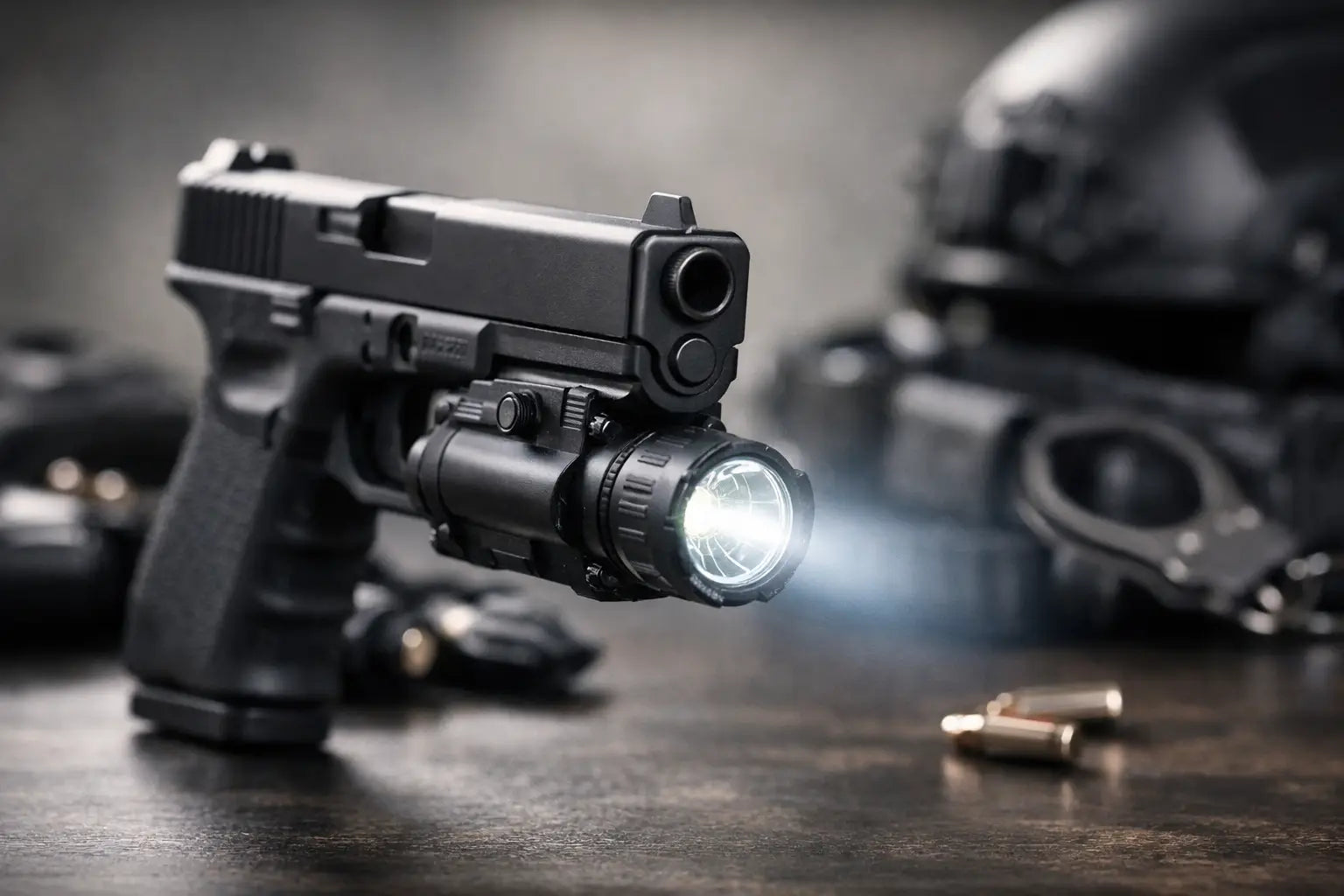
Flashlights are another area where output is only part of the equation. Beam pattern, runtime, grip, and durability all matter. A high-lumen light may look impressive, but if it burns through batteries too fast or creates too much glare during close-range work, it may not be ideal for traffic duty. In many cases, officers need a light that can transition between scene scanning, document checks, and signaling tasks without becoming a liability.
For larger scenes, portable lighting can improve both officer safety and scene efficiency. Crash investigations, vehicle fires, and roadway hazards often demand better illumination than a handheld light can provide. That said, larger scene lights require storage space and power planning, so they make more sense for some vehicles and units than others.
Cones, flares, and barriers still matter
There is nothing flashy about cones and barriers, but they remain essential for traffic control. They create physical structure at a scene and help drivers process what is happening before they are close enough to become a problem.
Cones need to be visible, stable, and quick to deploy. Height matters because taller cones are easier to see at distance, especially on higher-speed roads. Weight matters because lightweight cones can shift in wind or from passing traffic. Reflective collars matter because daytime visibility is only half the job.
Flares and electronic flare alternatives are another it-depends category. Traditional flares still provide strong visibility, but they come with obvious limitations around fire risk, storage, and weather. Electronic beacons or LED flare kits offer safer reuse and easier storage, especially for agencies looking to standardize equipment across fleets. The trade-off is that battery dependence and output quality vary by product.
Barrier tape and temporary markers can help in pedestrian management and perimeter control, but they are not substitutes for more visible, structured traffic devices. They work best as supplements, not as the primary control method.
Durability is not optional
Duty gear gets abused. It sits in hot trunks, gets tossed behind seats, gets soaked in rain, and gets dragged across asphalt. Traffic safety products that look acceptable on arrival but break down after a few weeks create more frustration than value.
That is why material quality and construction matter as much as the product category itself. Stitching, reflective trim attachment, switch protection, battery compartment sealing, and impact resistance all deserve attention. Public safety professionals do not need gear that performs well once. They need gear that works consistently when pulled into service with no warning.
For procurement buyers, this is where the cheapest option often stops making sense. Lower upfront cost can be attractive, especially on large orders, but replacement cycles, failure rates, and user complaints quickly erase those savings. In many cases, a slightly higher initial spend leads to better service life and fewer equipment headaches.
Fit the gear to the assignment
Not every officer needs the same traffic kit. A patrol officer handling occasional roadside stops may need a compact, practical setup with a vest, flashlight, and a few basic control devices. A traffic unit or crash investigator will usually need a more developed loadout with higher-frequency use in mind. Agency vehicles assigned to highway work may also justify additional scene lighting, more cones, and stronger warning options.
This is where category selection matters more than buying one of everything. The smartest traffic safety setup is the one officers will actually use because it fits the call types they handle most. Overbuying bulky gear can waste money and vehicle space. Underbuying creates avoidable exposure on the roadside.
For individual officers, it helps to think in layers. Start with personal visibility, then signaling tools, then scene-control equipment. For agency buyers, standardization matters too. If officers use different devices with different battery needs, controls, and deployment methods, training and consistency get harder than they need to be.
Buying from a specialized outfitter makes a difference
Traffic gear is one of those categories where product descriptions alone rarely tell the whole story. Working with a specialized tactical retailer matters because the context is different from general safety supply or consumer outdoor gear. Law enforcement buyers need products selected around duty belts, patrol vehicles, shift work, compliance needs, and repeat field use.
That is where an outfitter like AE Tactical adds practical value. A public safety-focused product mix makes it easier to compare traffic safety gear in terms that matter on the job, not just in terms of generic features. For agencies, that also means better support when ordering across multiple roles and vehicle types.
A fast ship time and dependable customer service are not just convenience points here. If a department is replacing worn gear before an operation, or an officer needs duty-ready equipment quickly, fulfillment speed affects readiness.
What good traffic gear really buys you
The best traffic safety gear for police does not just check a compliance box. It helps officers stay visible without sacrificing access, direct traffic more clearly, and control scenes with less confusion. Good gear reduces friction in the middle of a demanding task, and that matters more than any marketing claim.
When you are buying for patrol, traffic, security, or agency use, focus on function under pressure. The gear should be easy to deploy, easy to wear, and dependable after repeated use. If it can do that on a dark roadside with vehicles moving past at speed, it is doing its job.