Cart
0





A clean scene can become a weak case in a matter of minutes. The best forensic evidence collection tools help personnel document conditions, control contamination, package items correctly, and maintain a defensible chain of custody from the first contact through property intake. For patrol officers, investigators, security teams, and agency buyers, the right kit is less about carrying every possible item and more about having dependable tools matched to the calls and scenes your team handles.
Start With the Scene, Not the Catalog
Evidence collection begins with scene control. Before an item is touched, personnel need to establish boundaries, limit unnecessary entry, identify hazards, and document what is present. A well-equipped response bag supports that process with barriers, personal protective equipment, documentation materials, and collection supplies that are easy to reach under pressure.
Tool selection should follow agency policy, local evidence procedures, and the type of scene. A patrol officer handling a vehicle burglary, for example, needs practical packaging and documentation supplies that can be deployed quickly. A dedicated crime scene technician may need specialized latent print, biological, and trace-evidence tools. Both need equipment that protects the integrity of the item and clearly records who handled it.
The central standard is simple: collect only what you can document, preserve, and transfer correctly. A large kit does not compensate for poor process, while a focused kit used consistently can prevent avoidable evidence problems.
Best Forensic Evidence Collection Tools by Mission Need
PPE and contamination control supplies
Disposable nitrile gloves are foundational. Personnel should carry multiple sizes and change gloves between items or areas when cross-contamination is a concern. Latex-free nitrile options are often the practical choice for field teams because they provide good tactile control and reduce allergy concerns.
Face masks, protective eyewear, disposable coveralls, shoe covers, and hand sanitizer also have a place in many response kits. The level of PPE depends on the scene, potential biohazards, weather, and agency protocol. PPE is not only about personal protection. It also helps reduce the chance that personnel introduce hair, fibers, skin cells, or other material into the evidence environment.
Documentation and measurement tools
A scene should be documented before collection begins whenever conditions allow. A compact notebook, permanent markers, evidence labels, a ruler or photo scale, measuring tape, and a reliable light provide a solid field foundation. Waterproof notebooks and all-weather writing tools are particularly useful in South Florida humidity, rain, roadside conditions, and outdoor scenes.
A photo scale is a small tool with a major job. Used correctly, it gives investigators and analysts a known reference point for wounds, footwear impressions, tool marks, damaged property, and other details. Choose scales that are durable, easy to clean, and high-contrast enough to remain readable in photographs.
For agencies issuing collection gear, standardizing markers, labels, and forms can reduce confusion at property intake. Consistent supplies make it easier for officers to complete required fields and easier for supervisors to spot missing information before evidence changes hands.
Evidence packaging supplies
Different evidence requires different packaging. Paper evidence bags and envelopes are commonly used for many dry biological items because paper can allow moisture to dissipate. Plastic bags may be appropriate for certain non-biological materials, but wet or damp biological evidence generally requires agency-approved drying and packaging procedures before final storage. Packaging decisions should always follow your evidence unit’s rules and applicable laboratory guidance.
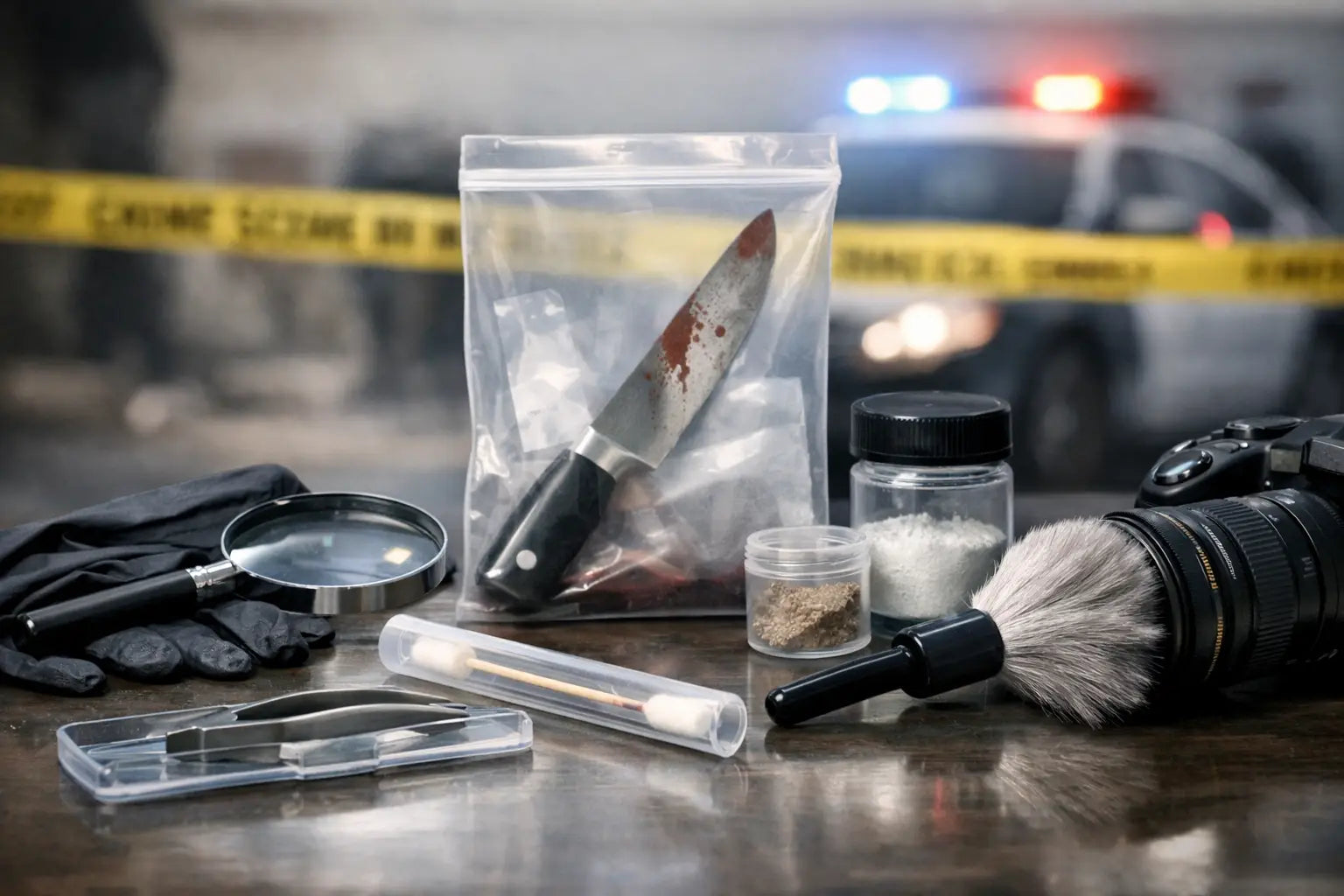
A practical field kit often includes paper bags in several sizes, envelopes, coin envelopes, tamper-evident evidence tape, zip-top bags, cardboard containers, and evidence tags. Small rigid containers can protect sharp objects, fragile trace material, or items that could puncture standard packaging. Tubes, bindles, and small collection boxes are useful for hairs, fibers, glass fragments, paint chips, and other trace evidence that can easily be lost.
Do not overlook the basics: permanent markers that write on packaging, preprinted labels, and seals that visibly show if a package has been opened. A properly packaged item with incomplete labeling can still create a chain-of-custody problem.
Swabs, collection cards, and biological evidence supplies
Sterile swabs are common tools for collecting suspected biological material from surfaces, weapons, clothing, vehicle interiors, and other items. Agencies should select sterile, individually packaged swabs and follow approved collection, drying, and storage procedures. The surface, condition of the sample, and laboratory requirements all affect the correct method.
Collection cards, sterile water, drying racks, forceps, and clean paper packaging may also be required, depending on the agency’s process. Forceps should be clean and properly handled between samples. When a scene may contain bloodborne pathogens or other hazards, personnel must follow their exposure-control plan and avoid taking unnecessary risks to preserve an item.
Biological evidence is an area where shortcuts can be costly. Moisture, heat, poor labeling, and cross-contamination can undermine laboratory results. If your role is first response rather than specialized collection, the right decision may be to protect the scene and request the appropriate investigator or technician.
Latent print collection tools
Latent print work can range from basic patrol-level preservation to full processing by trained personnel. A field-ready kit may include fingerprint powder, brushes, lifting tape, backing cards, evidence labels, and a flashlight or alternate light source. Black, gray, magnetic, fluorescent, and other powders are selected based on the surface and conditions, but training matters as much as the product.
Improper powder application can obscure or destroy ridge detail. Before buying a large selection of powders and lifting supplies, confirm what your agency authorizes and what personnel are trained to use. For many teams, the most valuable first step is protecting an item from handling, documenting its condition, and transferring it to trained personnel for processing.
Lights, magnification, and trace-evidence tools
A dependable flashlight belongs in every operational loadout, and it is equally valuable at scenes. High-output white light helps locate, photograph, and inspect evidence in low-light conditions. Adjustable-output lights are useful because excessive brightness can create glare on glossy surfaces or wash out details in photographs.
Magnifiers, forceps, clean tweezers, small rulers, and collection bindles support trace-evidence work. These items are inexpensive, compact, and easy to overlook until a scene involves broken glass, fibers, paint transfer, suspected narcotics residue, or tiny fragments. Keep them organized in a case with labeled compartments so a critical small item does not disappear into a larger bag.
Scene security and safety equipment
Evidence collection cannot be separated from scene safety. Barrier tape, traffic cones, safety vests, disposable lighting, and signage may be as important as swabs or packaging on a roadside collision, public venue incident, or outdoor scene. Controlling access protects evidence from weather, bystanders, vehicles, and well-intended personnel who do not need to be inside the perimeter.
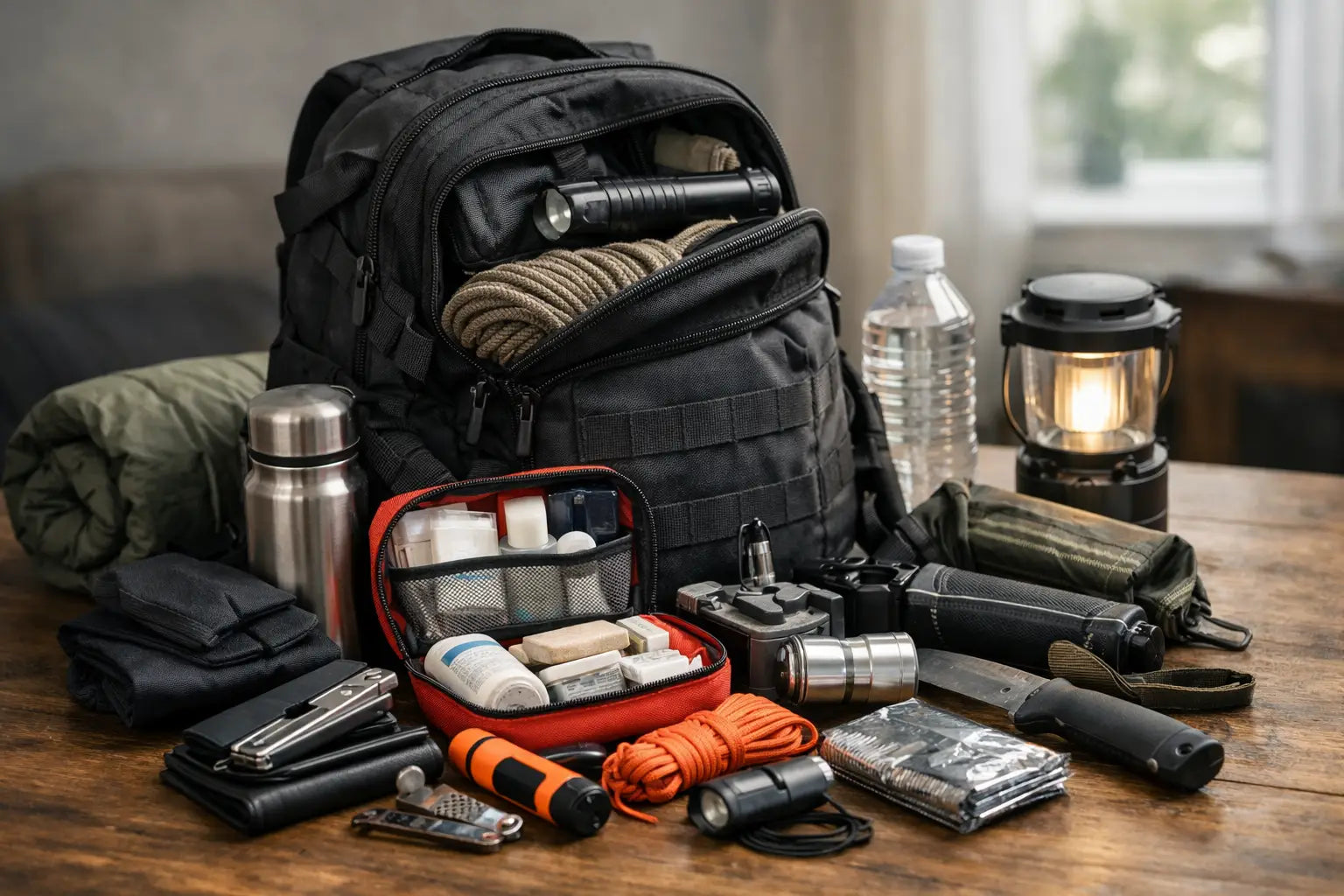
Hard cases and organized bags are worthwhile investments for agencies and individual professionals who transport collection gear. A Pelican-style hard case can protect sensitive supplies from impact and moisture, while a modular response bag gives personnel faster access to frequently used items. The better option depends on whether the kit stays in a vehicle, moves between shifts, or is carried into scenes on foot.
Build Kits Around Roles and Call Types
A single universal kit rarely serves everyone well. Patrol personnel benefit from a compact first-response kit with gloves, barriers, basic documentation tools, packaging, labels, and a light. Detectives may need added swabs, trace collection materials, photo scales, and latent print supplies. Crime scene specialists often require separate, more comprehensive kits for biological evidence, impressions, firearms-related evidence, latent processing, and specialized photography.
Agency buyers should also plan for replenishment. Gloves, swabs, bags, labels, tape, batteries, and disposable PPE are consumables. A low-cost kit becomes a liability when half its contents are expired, wet, missing, or mixed with unrelated gear. Assign responsibility for regular inspections, stock rotation, and replacement before major callouts expose a gap.
At AE Tactical, public safety professionals can shop forensic, protective, and duty-ready gear around operational needs rather than generic outdoor categories. That approach matters when a kit has to work from the trunk, at a roadway scene, or during a long overnight call.
What to Check Before You Buy
Prioritize compatibility with your agency’s evidence procedures, laboratory submission requirements, and training standards. Then assess durability, packaging quality, ease of inventory, and how the kit will be carried. Buying individually packaged sterile components may cost more than bulk supplies, but it can simplify contamination control and accountability.
Avoid treating forensic tools as one-time purchases. Inspect cases for damaged latches, check expiration dates where applicable, replace depleted supplies, and keep documentation materials dry and readable. Training refreshers should accompany new equipment, especially when agencies change collection methods or introduce new packaging requirements.
The most useful evidence kit is the one your personnel can access quickly, use correctly, and restock without guesswork. Build it deliberately, keep it inspection-ready, and let your agency’s procedures guide every item that goes into the bag.