Cart
0





A vest that looks right on a product page can become a problem halfway through a 12-hour shift. Body armor has to work with your duty belt, radio, medical kit, vehicle seat, uniform, and range of motion. The right setup is not simply the highest-rated option available. It is the protection that matches your credible threat profile, agency policy, assignment, and ability to wear it correctly every time.
For patrol officers, security professionals, corrections staff, EMS personnel, and prepared civilians, buying armor should start with the mission. A plainclothes executive protection detail, a uniformed security post, and a rifle-response role do not demand the same coverage, weight, or carrier configuration. Clear priorities lead to better equipment decisions and fewer compromises after the fact.
Start With the Threat, Not the Product Name
Armor ratings are meaningful only when they are tied to the test standard and the specific threat the panel or plate was designed to address. Before comparing carriers, colors, or accessory options, identify the hazards you are realistically preparing for. Department policy, site risk assessments, assignment requirements, and local regulations should all factor into that decision.
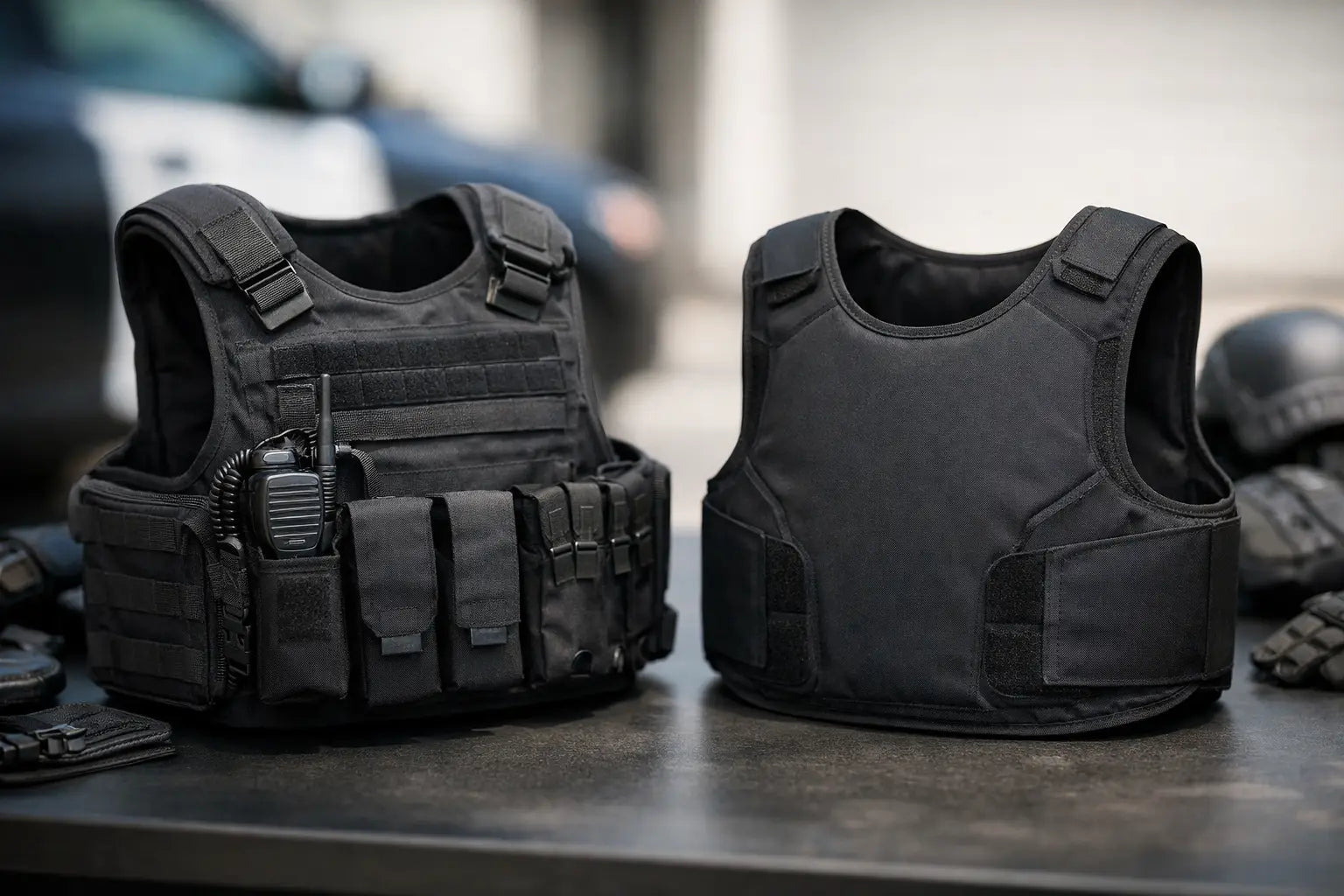
Soft armor is commonly selected for routine wear when handgun threats are the primary concern. It is typically more flexible and easier to conceal or wear for extended periods than hard plates. Many working professionals prioritize it for daily patrol, courthouse security, executive protection, and other assignments where mobility and all-day comfort matter.
Hard armor plates are generally used when rifle threats are part of the operational picture. They add protective capability but also add weight, bulk, and heat retention. A plate carrier may be the right choice for a tactical team, high-risk warrant service, a security team with a defined response role, or range training. It may be unnecessarily restrictive for someone who spends most of a shift driving, standing posts, or working in close public contact.
Always review the manufacturer documentation for the exact model. Look for the listed protection rating, test standard, size, material, date of manufacture, warranty terms, and care instructions. Do not assume that similarly named products offer the same protection. Armor is protective equipment, not a category where visual similarity is enough.
How Body Armor Should Fit
Fit affects both coverage and performance. Armor that shifts, rides too low, or restricts shoulder movement can create problems when drawing a sidearm, shouldering a long gun, operating a radio, or moving through a vehicle. It also becomes less likely to stay on during the full length of a shift.
For front and back armor panels, the goal is coverage over vital areas without interfering with natural movement. The front panel should sit high enough to protect the upper chest area while still allowing the wearer to bend, sit, and work. The back panel should provide corresponding coverage without pushing the carrier into the belt line when seated.
Hard plates require equally careful sizing. Bigger is not automatically better if the plate blocks a proper stock weld, catches on gear, or makes it difficult to work from a seated position. Plate dimensions, cut style, and curvature all influence how the armor handles on the body. A multi-curve plate may offer a more natural fit for extended wear, while the final decision still depends on body shape, role, budget, and carrier compatibility.
When possible, test the full setup rather than trying on a carrier by itself. Wear your normal uniform or base layer, duty belt, radio, and any equipment you regularly carry. Sit in a vehicle, reach overhead, kneel, perform controlled draws where authorized, and check whether the setup stays stable. Those basic movements reveal more than a few minutes in front of a mirror.
Carrier Design Changes the Experience
A carrier does more than hold ballistic panels or plates. It determines how the armor rides, how much heat it retains, and how well it integrates with the rest of your equipment. Concealable carriers are built to stay low profile under outer garments. External carriers can provide easier access, more adjustment, and better options for identification or select equipment placement.
For overt body armor, consider shoulder adjustment, cummerbund design, ventilation, cable management, and available attachment space. More modularity can be useful, but it is not automatically an advantage. A carrier overloaded with pouches, tools, and unnecessary accessories becomes heavier, harder to manage, and more likely to interfere with basic tasks.
Keep mission-critical equipment accessible and avoid placing hard objects directly where they create pressure points. For duty use, a clean, organized layout is usually more effective than a carrier covered edge to edge. Agency uniform standards may also dictate carrier color, patch placement, approved panels, or equipment configuration.
Weight, Heat, and Wear Time Are Real Trade-Offs
Protection is the purpose of armor, but wearability determines whether that protection is present when needed. This is especially relevant in South Florida and other hot, humid environments, where heat stress and moisture can turn a poorly configured vest into an operational distraction.
Lighter materials and streamlined carriers can reduce fatigue, but they may cost more or offer different coverage and durability characteristics. Larger plates, additional side protection, and extra equipment can improve capability for a specific role while reducing mobility and increasing heat load. There is no universal setup that is ideal for every officer, guard, medic, or range user.
For daily wear, prioritize a configuration you can properly adjust and comfortably wear through normal work activity. For specialized response, build around the actual task and the time the equipment will be on your body. A short-duration tactical mission permits different trade-offs than a full patrol shift.
Hydration, breathable base layers, and a properly adjusted carrier can help manage heat, but they do not eliminate it. Train in your equipment under realistic conditions. If the armor changes how you move, communicate, enter a vehicle, or access medical gear, those changes should be understood before a callout or emergency.
Verify Compatibility Before You Buy
Not every armor panel fits every carrier, and not every plate carrier supports every plate thickness, cut, or size. Verify the carrier's stated compatibility before selecting armor. A plate that is too thick can create poor retention or prevent the flap from closing correctly. A panel that is too small can shift inside the carrier and compromise comfort and coverage.
This applies to accessories as well. If your role requires identification panels, a hydration system, medical pouch, radio routing, or rifle magazine carriage, confirm that each item works with the carrier without blocking access to essential tools. A setup should support your job, not force you to change proven work habits around awkward gear placement.
For agency purchases, standardizing approved armor and carriers can simplify training, replacement, sizing, and inspection. Individual users should still be sized correctly, since one model or size will not fit every member of a team the same way.
Care, Inspection, and Replacement Matter
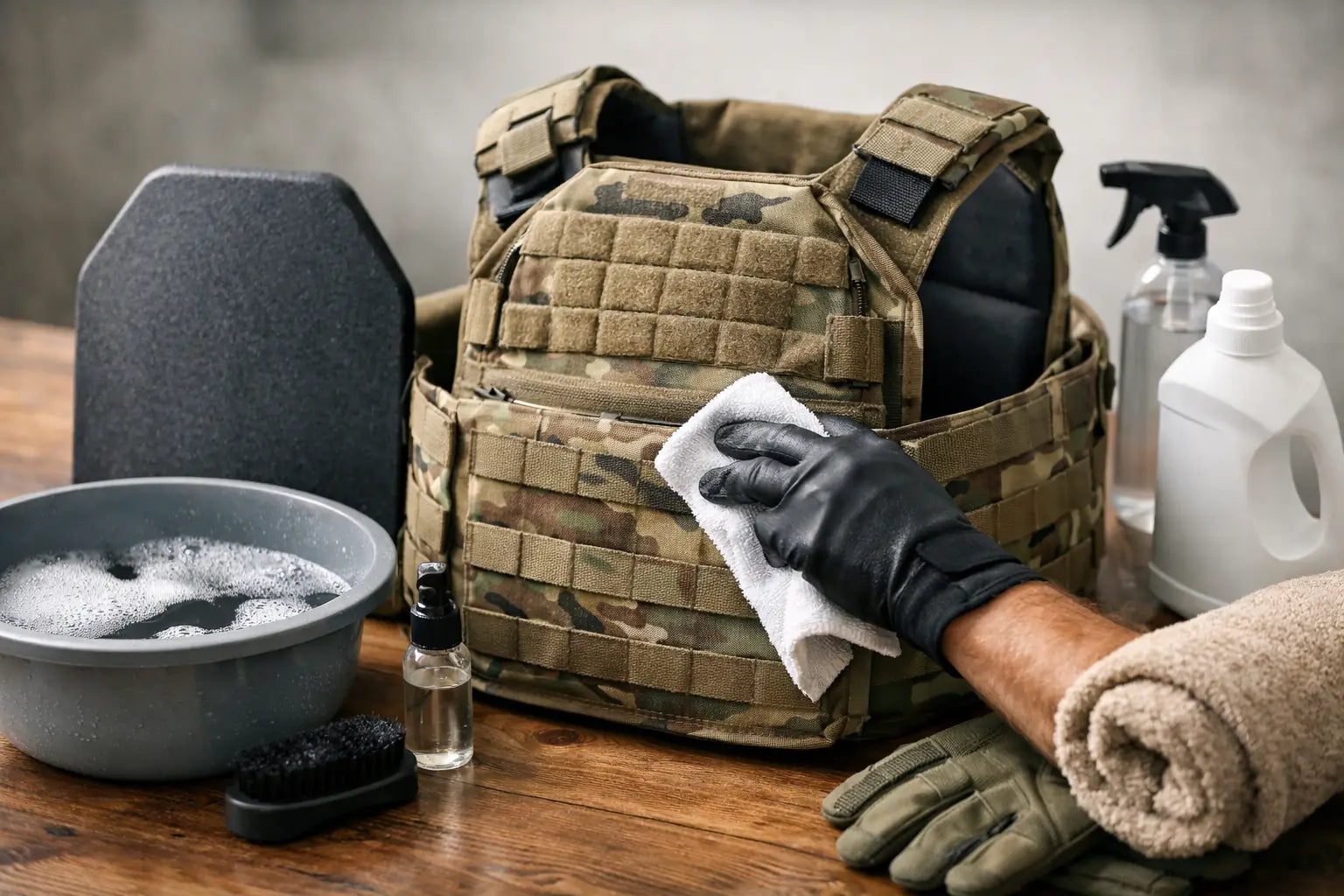
Body armor requires routine attention. Follow the manufacturer's cleaning instructions, and do not use harsh chemicals, machine washing, or high heat unless the product documentation specifically permits it. Store armor flat or according to the manufacturer's guidance, away from prolonged direct sunlight, moisture, and extreme temperatures.
Inspect panels, plates, stitching, closures, and carrier fabric on a regular schedule. Look for cracking, warping, cuts, delamination, damaged seams, loose hook-and-loop closures, or other signs of wear. If armor has been involved in an impact, exposed to questionable conditions, or shows damage, remove it from service and follow manufacturer and agency procedures.
Do not treat an expiration date as a reason to ignore the rest of the inspection process, and do not treat a clean-looking panel as proof it remains serviceable. Manufacturer guidance, agency policy, storage history, and actual condition all matter. Keep records of purchase dates, issued equipment, inspections, and replacement schedules.
Buy for the Assignment You Actually Have
The best armor decision is specific: the right protection level, correct fit, compatible carrier, and manageable weight for the work in front of you. AE Tactical supports public safety professionals and prepared customers with mission-focused gear choices, but the final configuration should always reflect your role, policy requirements, and professional judgment.
Before your next shift, range day, or equipment issue, put the setup on and move in it. Armor earns confidence when it fits correctly, stays serviceable, and lets you perform the job without hesitation.