Cart
0





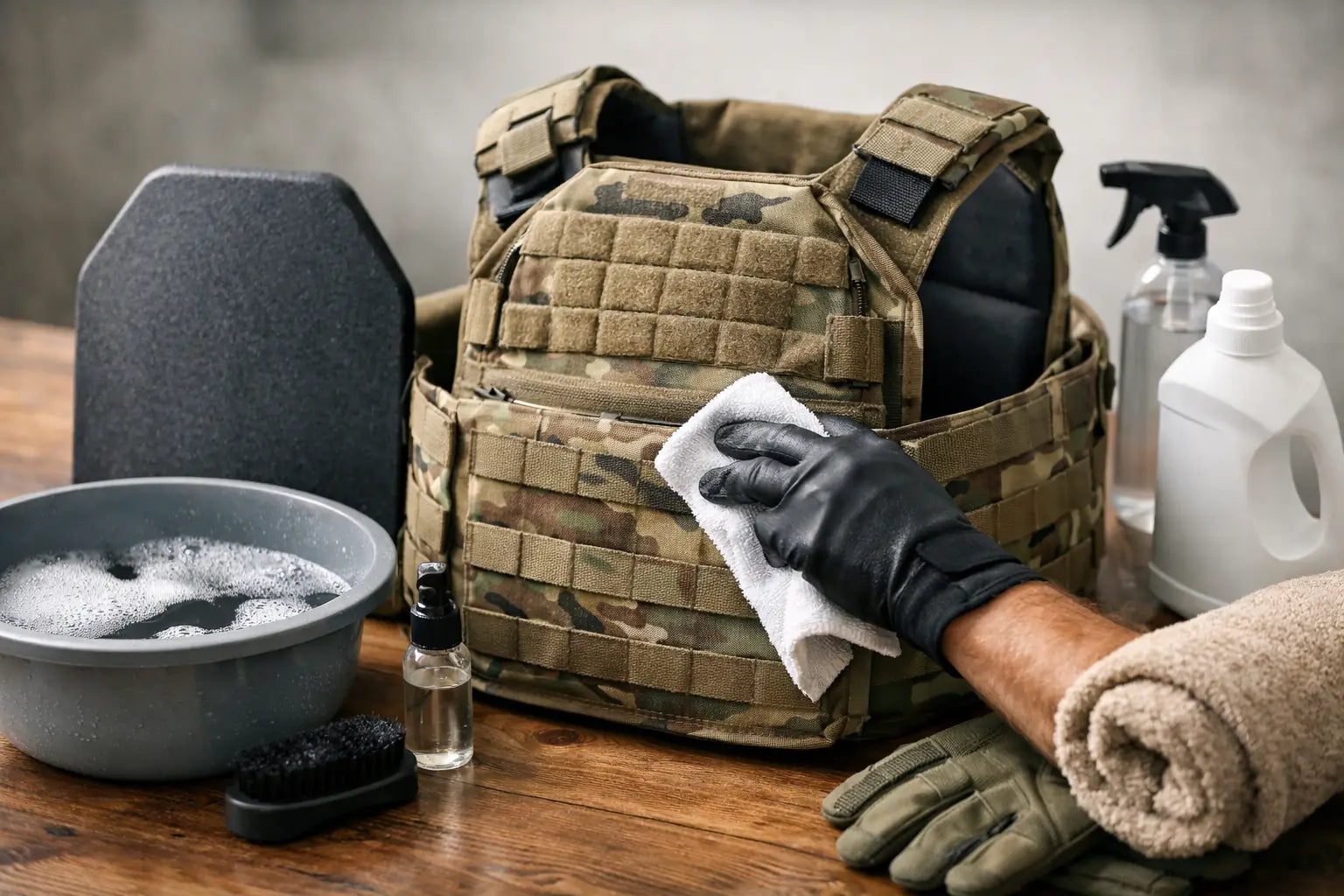
A plate carrier can look serviceable long after sweat, salt, dust, and range debris have started working into the fabric and hardware. Knowing how to clean plate carriers correctly protects the gear you rely on without weakening hook-and-loop, damaging padding, or exposing armor components to unnecessary moisture.
For duty, security, training, and range use, the right approach is usually controlled hand-cleaning - not tossing the entire setup into a washing machine. Start by separating the carrier from everything it carries, then clean only what the material and manufacturer instructions allow.
Before You Clean a Plate Carrier
Clear a clean workspace and remove every accessory from the carrier. Take out hard armor plates, soft armor panels, magazines, medical supplies, radios, hydration bladders, patches, lights, and any removable pouches. Open every zipper and empty every pocket. Fine sand, loose brass, lint, and debris tend to collect behind placards, inside admin pockets, and along the bottom of plate bags.
This step matters for more than convenience. Ballistic plates and soft armor are not treated like nylon equipment. Water can enter a plate bag, pool around an armor panel, and cause problems that may not be visible immediately. Cleaning an assembled carrier also traps grime beneath pouches and makes drying slower.
Before applying any cleaner, check the care label and the manufacturer guidance for your specific carrier. Materials vary. Most modern carriers use durable nylon, laminate fabrics, spacer mesh, elastic, closed-cell foam, and polymer hardware, but their dyes, coatings, and bonding methods are not all the same. Manufacturer instructions always take priority.
What You Need to Clean Plate Carriers
A basic cleaning kit is enough for routine maintenance: lukewarm water, a mild detergent or technical-fabric cleaner, a soft nylon brush or clean cloth, a small toothbrush for hardware, and dry towels. Use a tub, sink, or utility basin that is clean and large enough to work around the carrier without crushing it.
Avoid bleach, fabric softener, harsh degreasers, petroleum-based cleaners, and strong solvents. These products can fade camouflage or solid colors, break down protective coatings, leave residue on hook-and-loop, and reduce the life of elastic and bonded materials. Scented laundry products are also a poor choice for patrol, security, or field use because they can leave a noticeable fragrance behind.
Do not use high heat. Hot water, dryers, heat guns, and direct sun for extended periods can warp polymer buckles, degrade elastic, and shorten the working life of nylon and laminate components.
How to Clean Plate Carriers Step by Step
Shake out dry debris first
Take the empty carrier outside or over a trash can and shake it thoroughly. Use a soft brush to loosen dried mud, dirt, grass, and range debris from seams, webbing, and the interior mesh. Pay close attention to hook-and-loop fields, cummerbund channels, shoulder strap padding, and the underside of placards.
If the hook-and-loop is packed with lint, use tweezers or a stiff dry brush to remove it. Do not aggressively pull at the loop material. Damaged hook-and-loop may not hold ID panels, patches, or placards securely when you need them.
Spot-clean the dirtiest areas
For most carriers, spot-cleaning is the best first option. Mix a small amount of mild detergent into lukewarm water, dampen a cloth or soft brush, and work on salt marks, sweat buildup, mud, and surface grime. Focus on the shoulder straps, back panel, interior plate bags, cummerbund, and areas that contact your uniform or body armor most often.
Use light pressure and short strokes. The goal is to lift grime, not scrub through the fabric finish. For stubborn stains, let the damp cleaner sit on the area for a few minutes, then brush again gently. Repeat rather than moving to a stronger chemical.
Hand-wash when the whole carrier needs it
If the carrier has heavy sweat odor, salt buildup, or widespread dirt after extended training or field use, hand-washing may be appropriate. Fill a basin with cool to lukewarm water and a small amount of mild cleaner. Submerge the empty carrier only if its care instructions permit it, then gently agitate the water and work the fabric with your hands.
Do not twist, wring, or aggressively scrub the carrier. Those actions place unnecessary stress on seams, laminate edges, elastic, and foam padding. Use the soft brush only on visibly dirty areas and avoid saturating sections that do not need it.
Drain the wash water and rinse with clean, cool water until there is no soap residue. Detergent left in the fabric can attract dirt, irritate skin, and make the carrier feel stiff after it dries.
Clean buckles, webbing, and hardware
Use a toothbrush dampened with clean water to remove dirt from side-release buckles, quick-release hardware, snaps, grommets, zippers, and adjustment hardware. Work carefully around stitching and moving parts. If a buckle is jammed with grit, rinse it several times and cycle it by hand until it moves freely.
Do not lubricate buckles or zippers with oils unless the manufacturer specifically recommends a product. Oil collects dust and can transfer to uniforms, armor covers, or gear stored in the same bag.
Dry it completely before reassembly
After rinsing, press the carrier gently between dry towels to remove excess water. Hang it in a shaded, well-ventilated area with all flaps, pockets, and plate bags open. A fan can speed drying, especially in humid environments such as South Florida, but avoid heated airflow.
Drying can take a full day or longer depending on padding, mesh, and humidity. Do not reinstall armor plates, soft armor, pouches, or equipment until the carrier is completely dry inside and out. Moisture trapped in plate bags can cause odor, mildew, corrosion on metal components, and unnecessary exposure to armor systems.
What Not to Do
The fastest cleaning method is not always the safest one. Avoid these common shortcuts:
- Do not machine-wash a plate carrier unless the manufacturer explicitly approves it.
- Do not put the carrier in a dryer, even on a low setting.
- Do not soak hard armor plates or soft armor panels.
- Do not use bleach, stain removers, alcohol-heavy solvents, or fabric softener.
- Do not store the carrier while it is damp or packed tightly in a gear bag.
Cleaning Armor Plates and Soft Armor
Hard armor plates should generally be removed and cleaned separately with a lightly damp cloth. Do not submerge them, and do not let water sit around their edges, labels, or protective coverings. Inspect the plate for cracks, edge damage, deep gouges, swelling, or a damaged cover while it is out of the carrier. Follow the plate manufacturer’s instructions for care and service life.
Soft armor requires even more restraint. Wipe the outer cover with a damp cloth only if the manufacturer allows it. Never machine-wash, dry-clean, or soak soft armor. The ballistic package should remain protected from moisture, extreme heat, and harsh chemicals. If the carrier is contaminated with blood, bodily fluids, chemicals, or unknown substances, follow your agency exposure protocols and the armor manufacturer’s decontamination guidance rather than relying on ordinary cleaning methods.
How Often Should You Clean Your Carrier?
It depends on how the carrier is used. A range carrier used occasionally may only need a quick inspection and spot-cleaning after each session, followed by a deeper cleaning a few times per year. A patrol, security, corrections, fire, or EMS carrier exposed to daily sweat and repeated wear should be checked weekly and cleaned whenever salt, odor, dirt, or contamination starts building up.
Regular light cleaning is easier on the gear than letting grime accumulate until a deep wash becomes necessary. After each shift or training day, air the carrier out of its bag, brush away dirt, and inspect the attachment points. That simple routine reduces odor and gives you a chance to catch loose stitching, damaged buckles, worn elastic, or hook-and-loop that no longer holds securely.
Inspect It Before It Goes Back in Service
Once dry, reinstall armor and accessories deliberately. Check plate orientation, retention straps, shoulder adjustments, cummerbund fit, quick-release function, and the security of every pouch and placard. Make sure no moisture remains inside the plate bags and no cleaner residue is left on skin-contact areas.
For public safety professionals and serious range users, a clean carrier is not about appearance alone. It is a readiness check. AE Tactical recommends treating cleaning time as an opportunity to confirm that the setup still fits your mission, your armor remains protected, and your gear is ready for the next call, shift, or training day.