Cart
0





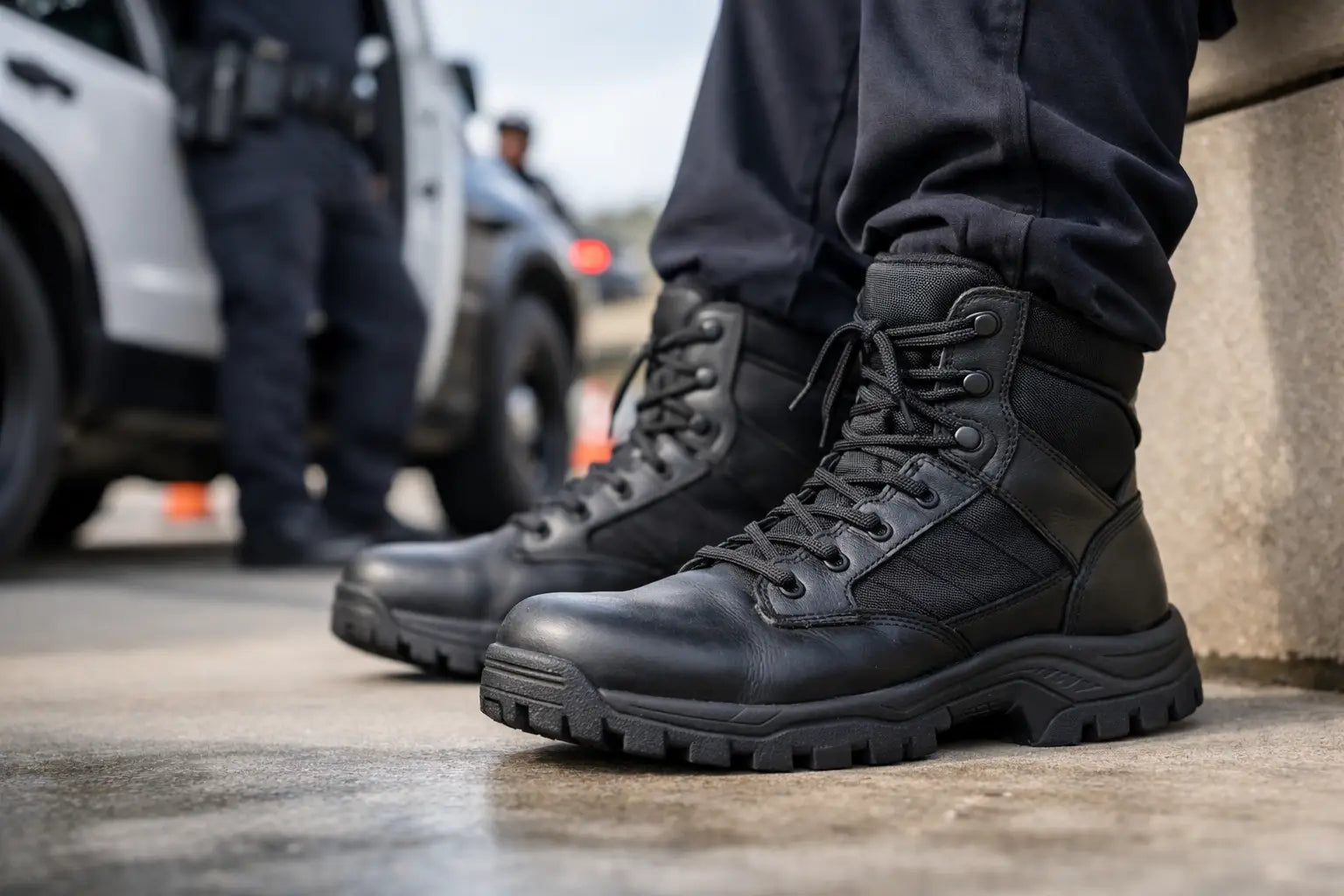
A bad pair of duty boots usually tells on itself before the shift is over. Hot spots show up by mid-morning, support fades when the pace picks up, and by the end of the day every stair, sprint, and standing post feels harder than it should. For law enforcement, security, corrections, fire, and EMS professionals, boots are not a style decision. They are daily equipment.
What good duty boots actually need to do
The job decides what matters most. A patrol officer may need a boot that stays comfortable through long vehicle hours but still gives solid traction during a foot pursuit. A security professional working a large property may care more about all-day cushioning and a clean uniform appearance. EMS personnel often need quick movement, strong grip on mixed surfaces, and materials that are easy to clean after messy calls.
That is why there is no single best answer for everyone. Good duty boots should match the environment, the pace of work, and the uniform standards you have to meet. The right pair helps reduce fatigue, supports movement under load, and holds up through repeated wear without becoming a liability.
Comfort is usually the first thing buyers talk about, but support matters just as much. A soft boot can feel great for an hour and still fail over a long shift if the midsole compresses too quickly or the heel loses structure. On the other side, a very stiff boot may offer protection and stability but become tiring if your day involves constant walking, kneeling, or driving.
How to choose duty boots for your assignment
Start with the job, not the brand name. If you work mostly indoors on hard floors, you may benefit from a lighter boot with more cushioning and flexibility. If you spend long hours outdoors, on uneven ground, or in wet conditions, outsole grip, water resistance, and ankle support move much higher on the list.
Height is one of the first choices to make. An 8-inch boot often gives more ankle support and a traditional duty look, which many law enforcement and security uniforms favor. A 6-inch boot can feel faster and lighter, which appeals to users who want more mobility. Neither is automatically better. If you carry more gear, work varied terrain, or value stability during sudden movement, the taller option may make more sense.
Toe construction matters too. Many professionals do well with a standard soft toe because it keeps weight down and flexibility up. Others need a safety toe because of departmental requirements or exposure to impact hazards. The trade-off is simple: more protection usually means more weight and less flexibility, so the right answer depends on your assignment.
Side zippers are another common dividing line. Some users want the speed and convenience, especially when gearing up early or changing quickly between shifts. Others prefer a traditional lace-up boot for simplicity and long-term durability. A good zipper can save time, but it also becomes one more component that can fail if build quality is poor.
Materials, construction, and real-world wear
Leather still earns its place in duty boots because it offers structure, durability, and a professional appearance. Full-grain leather generally holds up better and polishes well, which matters for uniformed roles. Synthetic panels reduce weight and improve breathability, which can be a major benefit in hot climates and extended outdoor use.
Many of the best-performing boots use a mix of both. That balance gives you support where you need it and airflow where you want it. In South Florida heat, for example, a fully waterproof heavy leather boot may sound appealing until it starts trapping heat and moisture during a long summer shift.
Waterproofing is useful, but only when it matches the environment. If you regularly work in rain, standing water, or unpredictable outdoor conditions, waterproof duty boots can be worth the added bulk and heat retention. If your work is mainly dry and hot, a breathable non-waterproof model may be the smarter choice for daily comfort.
Outsole design deserves more attention than it often gets. Slip resistance is critical, especially for hospital floors, polished interiors, wet sidewalks, stairwells, and mixed urban surfaces. Deep aggressive lugs can improve traction outdoors, but they may feel clunky indoors and pick up debris. A lower-profile slip-resistant sole often works better for professionals moving between vehicles, buildings, and pavement throughout the day.
Fit can make or break duty boots
Even the best-built boot fails if the fit is wrong. Duty boots should feel secure through the heel, stable through the midfoot, and roomy enough in the toe box to avoid pressure during long wear. A little extra room may seem harmless in the store, but too much movement inside the boot creates friction, and friction turns into blisters.
Try on boots with the socks you actually wear on duty. That sounds basic, but it changes fit more than many buyers expect. If you use orthotics or aftermarket insoles, factor those in from the start rather than hoping to make the boot work later.
Break-in time is another area where expectations should stay realistic. Some duty boots feel ready right out of the box. Others need a few shifts to soften and settle. That does not mean you should accept pain as normal. Mild stiffness can improve with wear. Pinching, heel lift, and pressure points usually do not.
If you spend substantial time in a vehicle, pay attention to flexibility through the ankle and forefoot. A boot that feels stable while standing can still feel awkward behind the wheel. For patrol work, that balance between support and drivability matters more than many first-time buyers realize.
Features worth paying for and features that depend
Not every premium feature delivers equal value for every user. Moisture-wicking liners, supportive footbeds, and quality outsoles usually pay off because they affect daily comfort and performance. Hardware quality matters too. Eyelets, hooks, stitching, and zippers take abuse every day.
Some extras depend on the mission. Electrical hazard protection, puncture-resistant plates, or heavy insulation can be essential in certain roles and unnecessary in others. If your assignment does not require them, they may only add weight and reduce comfort.
Lightweight boots are popular for good reason. They reduce fatigue over long shifts and often feel faster during movement. The trade-off is that very lightweight models may not hold structure as long under heavy use, especially for personnel carrying substantial gear or working rough conditions. If durability is the top concern, a slightly heavier boot may be the better long-term buy.
Polishability is another detail that still matters in many uniforms. Some boots are built for a sharp inspection-ready appearance, while others prioritize athletic comfort and modern materials. If your agency or employer expects a clean high-shine toe, make sure the boot can actually deliver that without extra hassle.
When to replace duty boots
Most professionals wait too long. The upper may still look acceptable while the support underneath is already breaking down. If your feet are more tired than usual, traction feels less secure, or the sole wear is noticeably uneven, your boots may be past their useful life even if they are not falling apart.
Watch the heel and outsole first. Those areas show wear quickly and affect stability with every step. Also check for softened midsoles, failing stitching, damaged zippers, and interior lining wear around the heel cup. Small failures tend to become big ones at the worst possible time.
Rotation helps if you have the option. Alternating between two pairs can extend lifespan, improve drying time, and reduce the day-to-day stress on the materials. For professionals working back-to-back shifts or long weeks, that can make a real difference.
Buying duty boots with confidence
The safest approach is to buy based on actual use, not assumptions. Look at shift length, terrain, weather, uniform policy, and whether your day is mostly standing, walking, driving, or moving fast under pressure. A boot that performs well for patrol may not be ideal for courthouse security. A strong EMS option may not be the best fit for corrections.
That is where a specialized outfitter matters. A retailer focused on public safety and field-use gear understands the difference between a boot that looks tactical and one that performs on duty. AE Tactical serves professionals who need that distinction to be clear, because the wrong gear costs more than money when the shift gets demanding.
A reliable pair of duty boots should disappear into the background of your day. You should notice your footing, your pace, and your readiness, not your feet hurting before lunch. Buy for the work you actually do, and the right pair will keep earning its place every time you lace up.