Cart
0





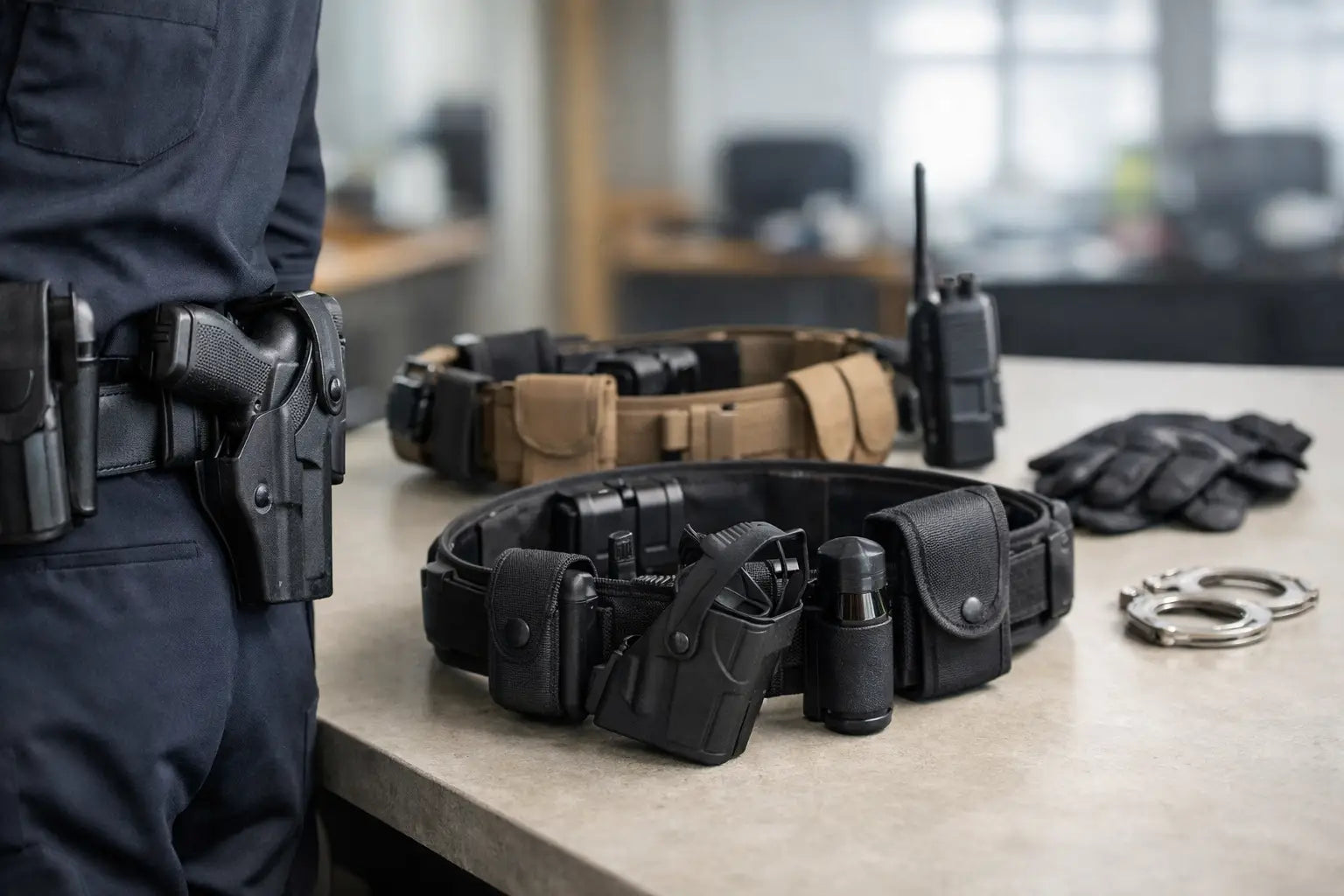
A duty belt can feel fine for the first hour and miserable by the end of the shift. That usually comes down to one thing - the belt was loaded before it was chosen correctly. If you are figuring out how to choose duty belts, start with the reality of your job: what you carry, how long you wear it, and how much movement your shift actually demands.
How to Choose Duty Belts for Real-World Use
The right belt is not just a strip of nylon or leather that holds pouches in place. It is the foundation of your daily loadout. If that foundation is too soft, too stiff, too narrow, or poorly matched to your gear, every other piece of equipment suffers with it.
For law enforcement, corrections, private security, and some fire or EMS roles, belt choice affects access, retention, comfort, posture, and even fatigue. A setup that works for courthouse security may not hold up in patrol. A belt that feels stable on the range may become a problem after ten hours in a vehicle. That is why the best choice depends on duty use, not just brand name or appearance.
Start with your job, not the belt
Before comparing materials or buckle styles, look at your actual assignment. Patrol officers often carry a heavier, more distributed load that can include a firearm, spare magazines, restraints, radio, medical gear, flashlight, glove pouch, and baton or less-lethal tools. Security professionals may need a lighter and lower-profile configuration. Corrections personnel may need mobility in confined spaces and a setup that reduces grab risk.
That matters because your belt should match your required gear, not the other way around. If your role requires a full-size sidearm, hard-case accessories, and multiple points of retention, you need a belt with enough rigidity to keep those items from sagging or shifting. If your load is lighter, too much stiffness can become its own comfort issue.
Belt width, stiffness, and support
Most duty belts follow standard width expectations so they fit common keepers, pouches, and holsters. The key difference is stiffness. A belt needs enough structure to support weight and maintain a consistent draw angle, but not so much that it digs into the hips or restricts movement every time you sit, bend, or get in and out of a unit.
A common mistake is assuming stiffer always means better. Extra rigidity can help with heavier loads, especially with mounted accessories that need a firm platform. But if the belt is overly rigid for your body type or shift demands, it may create pressure points and make long wear harder. The better question is whether the belt stays stable under your actual load.
If you routinely carry more equipment, look for a belt built to resist rolling and sagging. If your loadout is moderate, you may be better served by a balanced design that still supports gear without feeling like a hard ring around your waist.
Nylon vs. leather duty belts
This choice still matters, and it mostly comes down to policy, appearance requirements, and working conditions.
Leather remains common where a traditional uniformed appearance is expected. It can look sharp, hold structure well, and pair with matching gear finishes. The trade-off is maintenance, especially in heat, humidity, and wet conditions. Leather can also be less forgiving if your belt sees heavy daily exposure to sweat and weather.
Nylon belts are popular for a reason. They tend to be lighter, more weather-resistant, and easier to maintain. Many modern nylon designs also provide excellent stiffness and durability without the same upkeep demands. For officers and security professionals working active shifts in hot climates, nylon is often the more practical option.
Neither is automatically better. If your agency sets appearance standards, that may narrow the field quickly. If not, choose based on performance, not nostalgia.
Inner belts, keepers, and overall stability
A duty belt works as a system. The outer belt gets most of the attention, but the inner belt and keepers play a major role in comfort and security. If the belt rides up, rotates, or shifts during movement, your draw and access can change when you least want them to.
An inner belt helps anchor the outer belt in place and distributes load more consistently around the waist. Keepers add another layer of stability by reducing movement between the duty belt and the trouser belt. That can make a major difference during foot pursuits, defensive tactics, or repeated vehicle entry and exit.
If your current setup feels unstable, the issue may not be the outer belt alone. It may be the interface between belt, keepers, and pants. When choosing a new duty belt, think in terms of the full platform.
Buckle type and adjustment
The buckle is easy to overlook until it becomes a problem. A duty buckle needs to be secure, dependable, and compatible with your uniform and equipment layout. It should also allow practical adjustment.
Some belts prioritize a traditional look. Others focus on quick fastening and a more technical design. Either can work if the closure is reliable and holds tension. What matters most is that the buckle does not loosen under load, create unnecessary bulk at the front of the waist, or interfere with seated comfort.
Adjustment matters more than many buyers expect. Belt fit can change depending on underlayers, seasonal uniform changes, and how much time you spend seated. A belt with limited adjustability may feel acceptable in one context and frustrating in another.
Choose duty belts around load placement
When people ask how to choose duty belts, they often focus on the belt itself and ignore the load it has to manage. That is where comfort problems begin.
Think about where your heaviest items sit and how they balance across the belt line. A poor setup puts too much weight on one side or crowds the front of the waist where sitting and bending become uncomfortable. Even a high-quality belt can feel bad if the load is uneven or badly positioned.
Holster choice matters here too. A secure holster with the wrong ride or mounting position can create more belt pressure than expected. The same goes for radios, cuffs, and flashlight cases. If your setup is causing hotspot pain, lower-back fatigue, or hip pressure, the answer may be a better belt, a better layout, or both.
Retention and access should work together
Duty gear should stay put during movement, but it also needs to be accessible under stress. Your belt has to support both goals. If it flexes too much, retention devices and pouches can shift enough to disrupt muscle memory. If it is overloaded or crowded, access slows down.
That is why a smart belt choice supports a clean draw path and consistent pouch placement. You should be able to reach key tools without fighting belt movement or gear overlap. This is especially important for officers and security personnel who operate in close-contact environments where equipment retention is a real concern.
Comfort over a full shift is the real test
A belt that feels good standing in a store is only part of the story. The real question is how it performs after hours of walking, sitting, driving, and repeated movement. Heat, humidity, body type, and shift length all affect what feels comfortable.
Padding can help in some setups, but it is not always the answer. More bulk can create heat and interfere with a clean fit. In many cases, a properly rigid belt with a well-balanced loadout feels better than a heavily padded setup with poor weight distribution.
Fit also matters at least as much as material. A belt that is too tight creates pressure and fatigue. Too loose, and it shifts constantly. If you are between sizes or your loadout changes by assignment, look closely at the adjustment range before buying.
Think about compatibility before you commit
Not every belt works equally well with every holster, pouch, or keeper setup. Before choosing, make sure your belt width and thickness are compatible with the equipment you already trust. That is especially important if you use hard-mounted gear, retention holsters, or agency-issued accessories.
It is also smart to think one step ahead. If you expect to add medical gear, change holsters, or move into a different assignment, choose a belt platform that gives you flexibility without forcing a full replacement later.
For many professionals, the best value is not the cheapest belt. It is the one that holds up through daily wear, keeps gear stable, and does not need to be replaced after a short cycle of hard use. That is the standard serious public safety gear should meet, and it is why many buyers shop specialized sources like AE Tactical instead of general outdoor retailers.
When you are choosing a duty belt, think less about what looks impressive on a product page and more about what will still feel secure at hour ten. The right belt should disappear into the job - not become one more problem you have to manage.