Cart
0





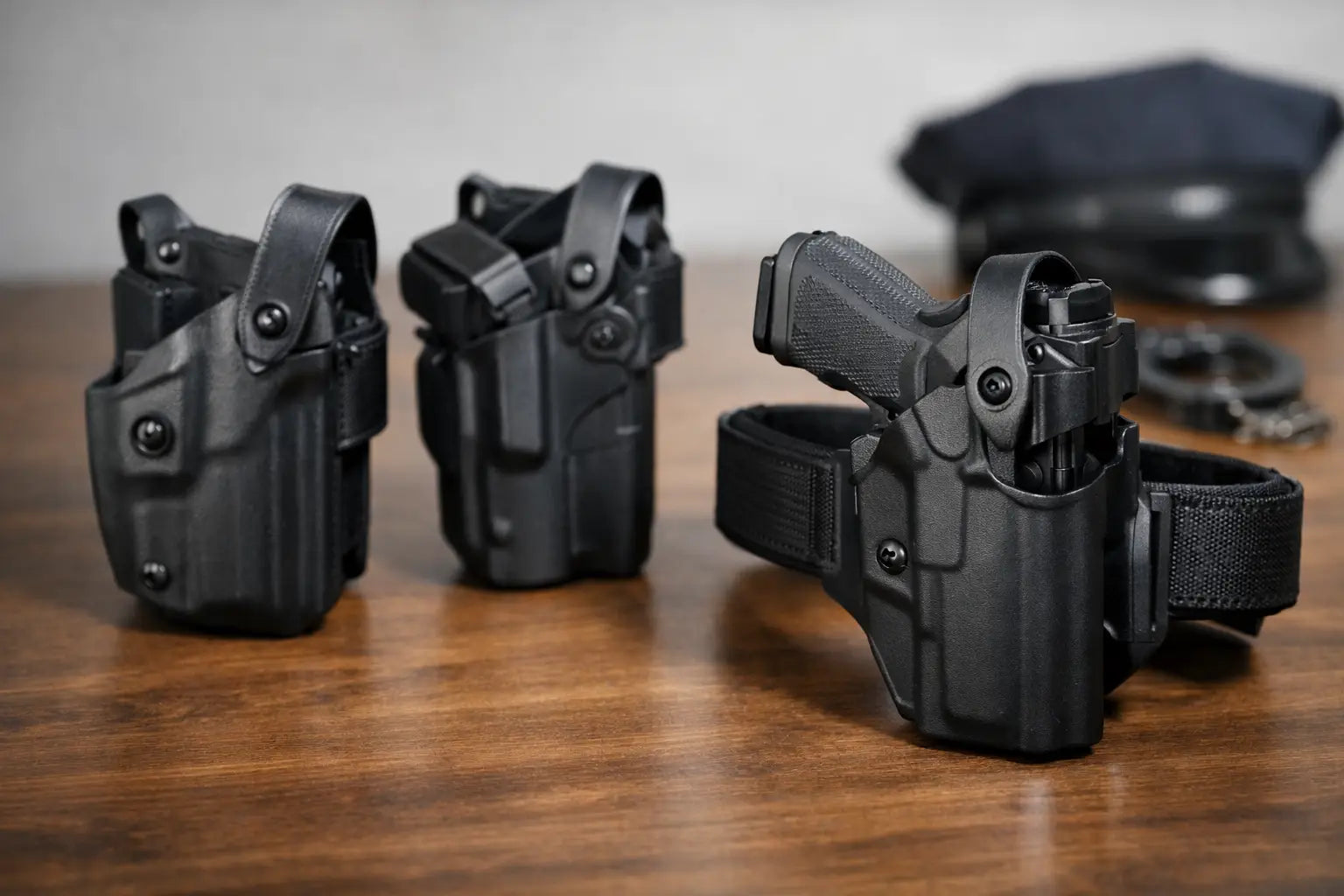
A duty holster has to do two jobs that naturally compete with each other: keep a sidearm secure during movement, contact, and a possible weapon-retention encounter, while still allowing a clean, repeatable draw under pressure. This duty holster retention levels guide explains what those levels mean, where the terminology can get confusing, and how to select a setup that supports your assignment, agency policy, and training standard.
What Holster Retention Levels Actually Mean
Retention describes a holster's ability to keep a handgun in place until the authorized user deliberately draws it. A properly selected holster should resist loss during running, climbing, ground work, vehicle movement, and physical contact. It should also protect the trigger guard and hold the firearm in a consistent position.
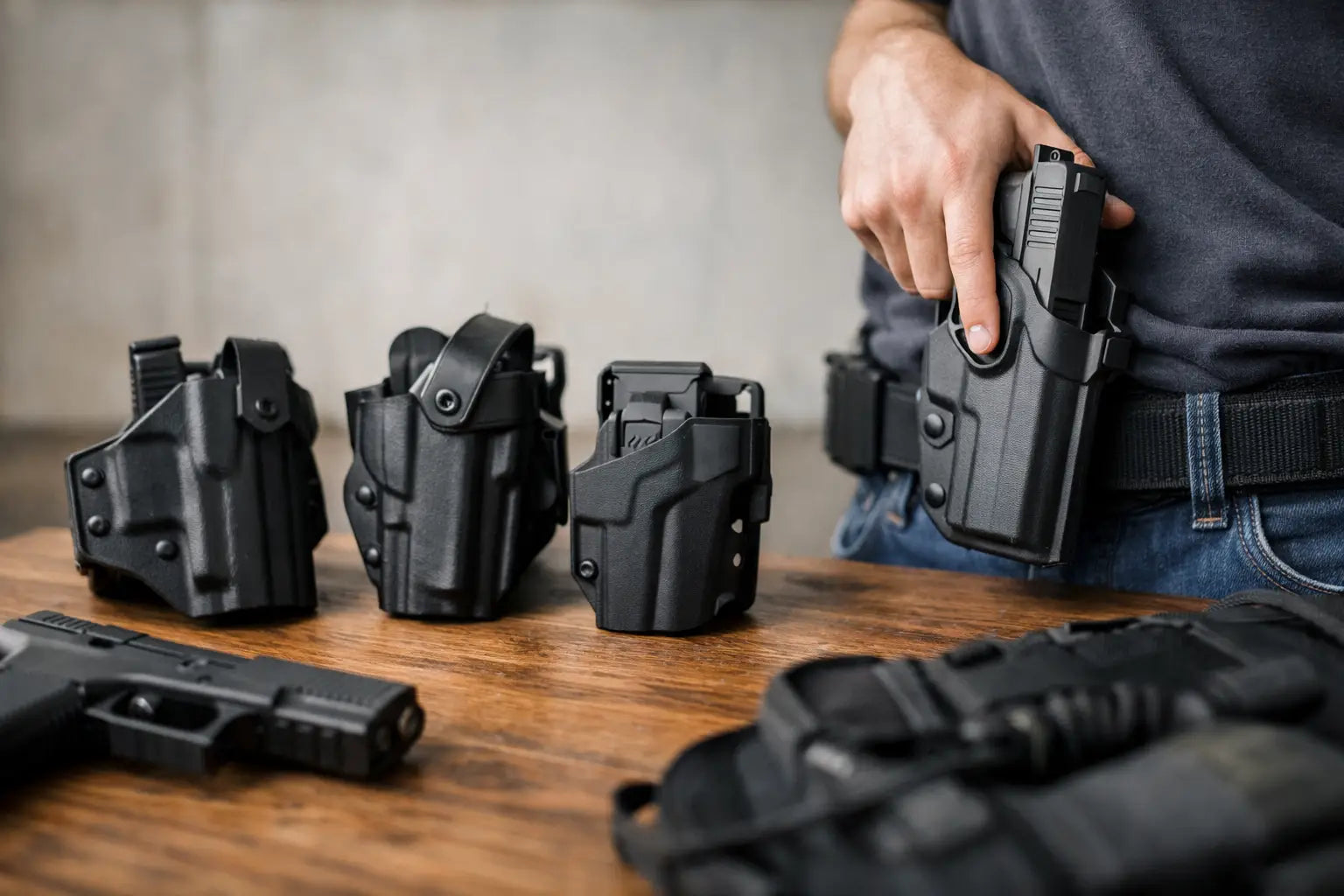
The word level is commonly used to describe how many retention features a holster incorporates. A friction-fit holster may rely on passive retention, while a higher-security duty model can add a thumb release, rotating hood, strap, locking mechanism, or other active device.
There is one critical detail: retention-level labels are not fully standardized across every manufacturer. One brand may count a particular locking component differently than another, and product names do not always tell the whole story. Treat Level I, Level II, and Level III as useful starting points, then review the holster's actual release sequence, firearm compatibility, and manufacturer specifications before purchasing.
Duty Holster Retention Levels: Level I Through Level III
Level I: Passive Retention With a Secure Fit
A Level I holster generally uses passive retention. The handgun is held by molded fit, adjustable tension, or both. The draw is straightforward because there is no separate active lock to defeat.
This style can work well for controlled environments, range use, plainclothes assignments, or security roles where concealment and a low-profile setup matter. It can also be appropriate for off-duty carry when the holster is designed for that purpose and covers the trigger guard completely.
For uniformed patrol, corrections, or posts involving frequent public contact, passive retention alone may not meet agency requirements or provide the desired margin of security. A duty belt, open carry position, and hands-on interaction create different risks than a concealed-carry setup.
Level II: Added Security for Active Duty Use
A Level II holster adds an active retention feature beyond friction or tension. Depending on the design, that could be a thumb-operated release, a retention strap, a rotating hood, or a locking system that must be released as part of the draw.
Level II is a common choice for armed security, uniformed officers in lower-risk assignments, and professionals who need more security without adding too much complexity. The right model lets the user establish a full firing grip, release the device naturally, and draw without changing hand position.
That last point matters. A holster can be technically secure but still be a poor operational fit if its release is awkward, slow to learn, or difficult to operate around gloves, body armor, or required duty equipment. The release should be deliberate without forcing an unnatural motion.
Level III: Higher Security for Patrol and Public Contact
A Level III holster uses multiple retention features, typically combining passive retention with more than one active security mechanism. Many uniformed patrol officers choose Level III duty holsters because they offer a higher degree of protection during foot pursuits, physical confrontations, and close public contact.
Higher retention is not automatically better for every user. More security usually means a more involved draw sequence, a larger holster body, and a greater need for consistent practice. For patrol, corrections transport, courthouse details, and other high-contact environments, that trade-off is often worthwhile. For a task where concealment, vehicle comfort, or rapid access is the primary concern, it may not be.
Some manufacturers also offer Level IV configurations or systems with additional locking features. These are often considered for specialized assignments, tactical teams, transport operations, or institutional policies requiring a higher security threshold. Selection should be driven by the actual mission, not simply by the highest number on the package.
Passive Retention vs. Active Retention
Understanding the difference between passive and active retention makes product comparisons much easier.
Passive retention is the resistance created by the holster's shape and tension. The firearm stays put because the shell is molded to the specific pistol and because an adjustment screw, tension device, or similar feature provides hold. It requires no separate action during the draw.
Active retention requires the user to intentionally disengage a device before the firearm can leave the holster. The mechanism may be operated by the thumb, index finger, or a natural draw motion, depending on the design. A quality duty holster is engineered so that the release does not compromise safe trigger-finger discipline.
Both forms work together in many professional holsters. A secure draw should feel controlled, not loose or unpredictable. At the same time, excessive tension can make the weapon difficult to draw consistently and may cause unnecessary wear. Set retention according to the manufacturer's instructions and verify it during supervised training.
Match the Holster to the Firearm, Light, and Assignment
A duty holster is not a universal accessory. It must be built for the exact handgun model and configuration you carry. Small differences in slide length, frame shape, optic cut, rail-mounted light, or barrel configuration can affect fit and retention performance.
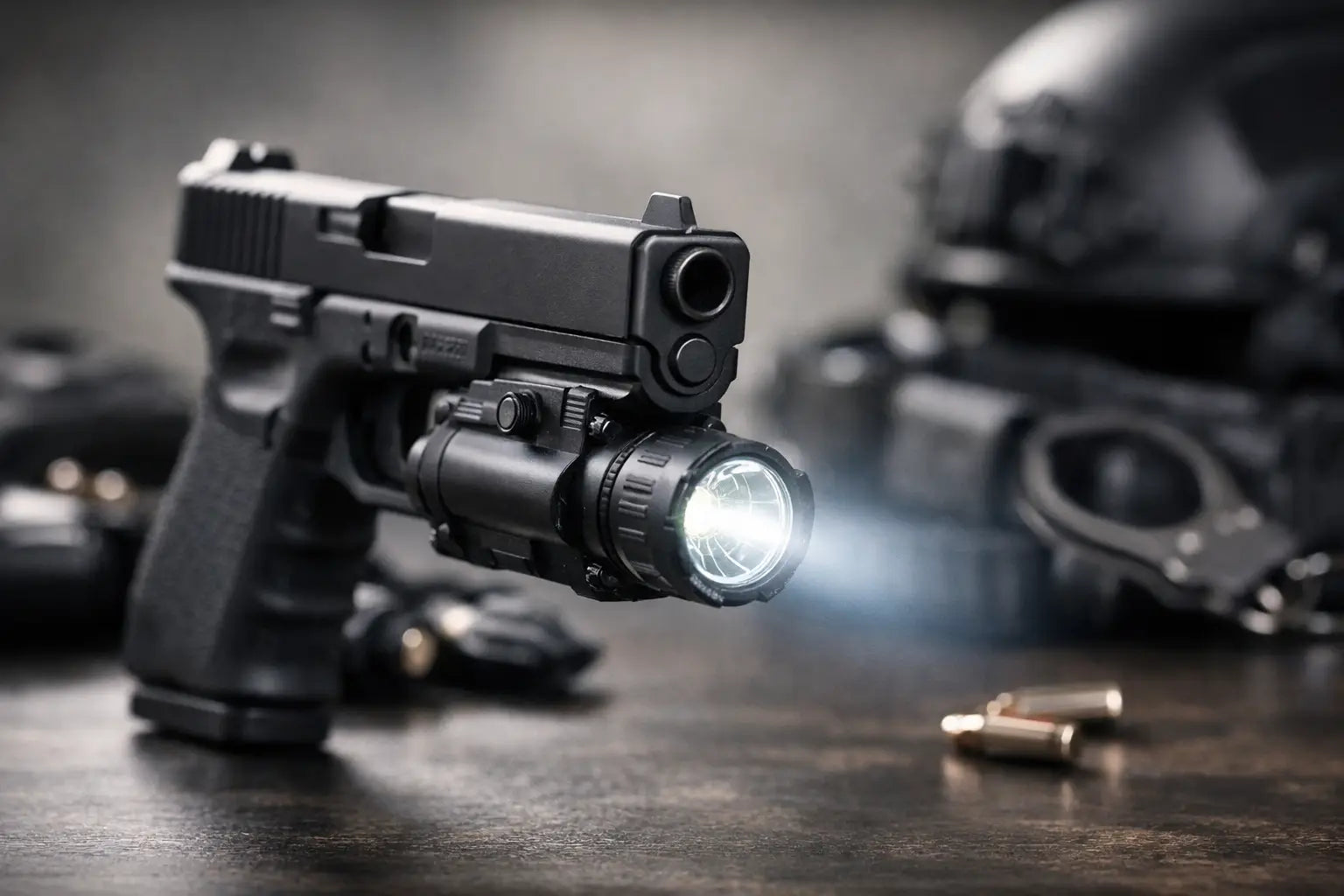
If your pistol is equipped with a weapon-mounted light or red-dot optic, choose a holster specifically designed around that setup. Do not force a light-bearing firearm into a non-light-bearing shell, rely on a loose fit, or modify a retention device to make gear fit. Those shortcuts can interfere with the draw, retention, and safe reholstering.
Also consider where and how you work. A uniformed patrol officer may prioritize a high-retention holster with a rigid belt mount and stable ride height. A security professional working long shifts may need to balance retention with vehicle comfort and ease of movement. Fire and EMS personnel who carry within a specialized role may have department-specific restrictions that dictate mounting position, clearance from other equipment, and access while wearing protective gear.
Agency policy comes first. Before buying, confirm the approved retention level, finish or color requirements, weapon-light authorization, optic compatibility, and any rules covering drop-leg platforms, mid-ride mounts, or quick-detach systems.
The Mounting System Matters as Much as the Holster
A secure holster shell can still perform poorly on the wrong mounting platform. The belt attachment determines ride height, cant, stability, and how the holster interacts with armor, outer carriers, jackets, and seat belts.
A higher ride can improve clearance around a vehicle seat and keep the handgun closer to the body. A mid-ride position may provide better clearance below body armor or a duty belt crowded with medical gear, restraints, radios, and pouches. Neither choice is universal. The correct setup allows a consistent grip, keeps the holster from shifting under force, and does not interfere with required equipment.
Inspect the mounting hardware regularly. Screws, belt attachments, locking tabs, and quick-detach components should be secure and used as intended. If a holster shifts, binds, or develops excessive play, correct the issue before returning it to duty use.
Training Is What Makes Retention Work
A retention holster is only as effective as the user's ability to operate it consistently. The more active devices a holster has, the more deliberate repetition is required. Practice should build a full firing grip, a correct release motion, a clean draw, and safe reholstering without looking down at the holster.
Train with the actual duty belt, outer carrier, gloves, jacket, and other gear you wear on assignment. Equipment that works on a square range can feel very different in a vehicle, during a low-light shift, or after physical exertion. Follow your agency training program and use qualified instruction for draw-stroke and weapon-retention work.
Avoid switching holster platforms casually. Moving between different release systems can create hesitation or an incorrect motion when speed and judgment matter. If you change holsters, treat it as a training event rather than a simple equipment swap.
A Practical Selection Checklist
Before committing to a duty holster, verify these operational basics:
- The holster is made for your exact handgun, including its optic and weapon light configuration.
- Its retention level meets agency policy and the realities of your assignment.
- You can establish a full grip and operate every release consistently while wearing duty gear.
- The mounting system fits your duty belt and provides appropriate ride height and stability.
- The holster fully covers the trigger guard and remains secure through normal movement.