Cart
0





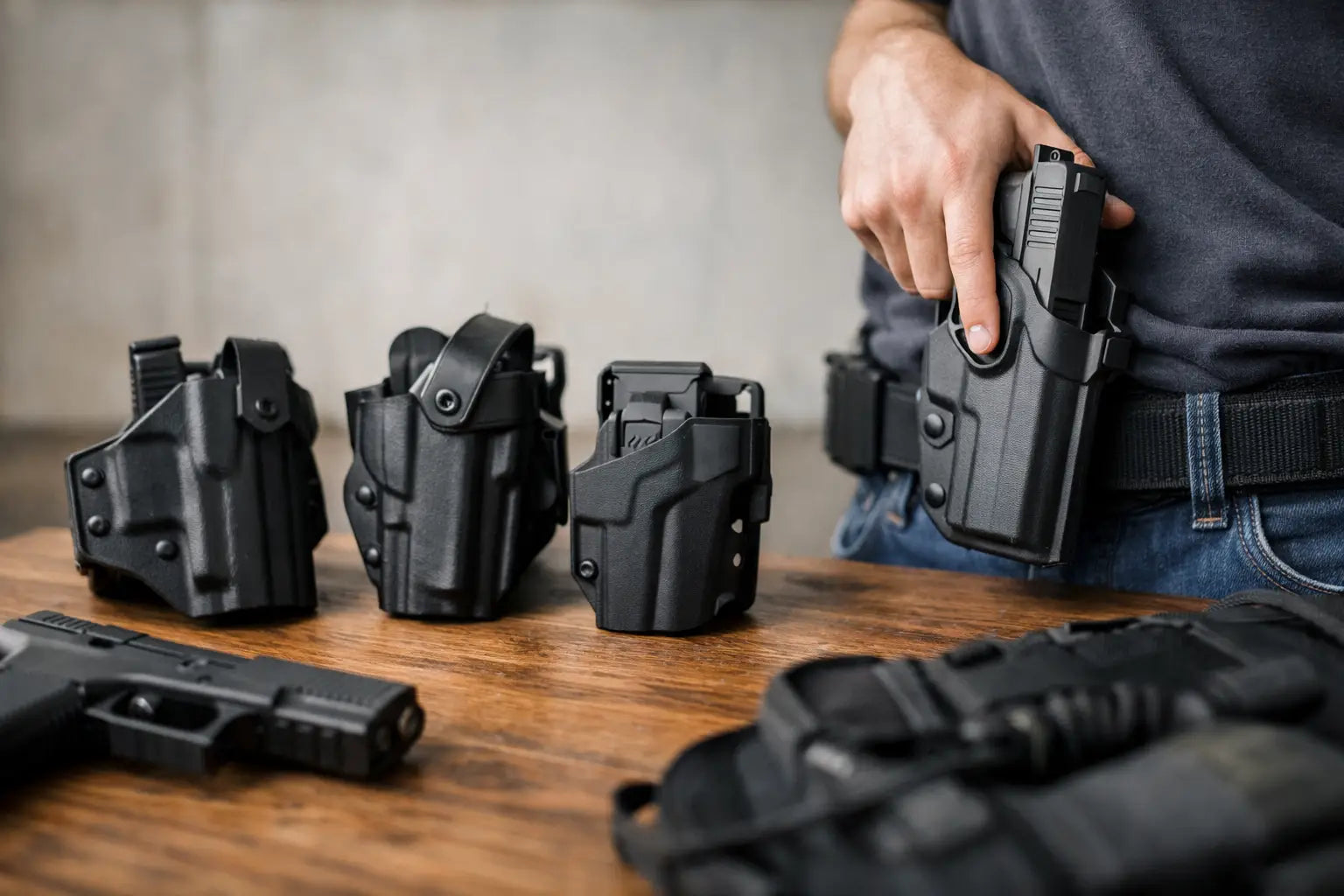
A retention holster that fights you on the draw is a problem. A retention holster that gives up your handgun too easily is a bigger one. If you're figuring out how to choose retention holster options for duty, security, range work, or everyday carry, the right answer comes down to your actual role, your training level, and how much weapon security you truly need.
For law enforcement, corrections, and many private security assignments, holster choice is not just about comfort. It affects weapon retention in close contact, draw consistency under stress, and compliance with policy. For armed citizens and range users, the balance shifts. Too little retention can be unsafe. Too much can slow access, add unnecessary bulk, and create failure points if you have not trained with the system.
Start with your real-world use case
The fastest way to choose the wrong holster is to shop by marketing language alone. A level of retention that makes sense on patrol may be excessive for concealed carry. A streamlined appendix holster may work well off duty but be a poor fit for uniformed security in public-facing assignments.
Think first about where the handgun will be worn, how visible it will be, and whether someone else may realistically try to grab it. A uniformed officer working traffic, transports, or street patrol faces a very different risk profile than a range shooter using an outside-the-waistband holster for drills. Likewise, a courthouse security officer, armored car employee, or corrections professional may need stronger retention because of regular close contact with the public or detainees.
This is where the phrase how to choose retention holster systems becomes practical instead of theoretical. You are not choosing a gadget. You are choosing a security level that matches your environment.
Understand retention levels before you buy
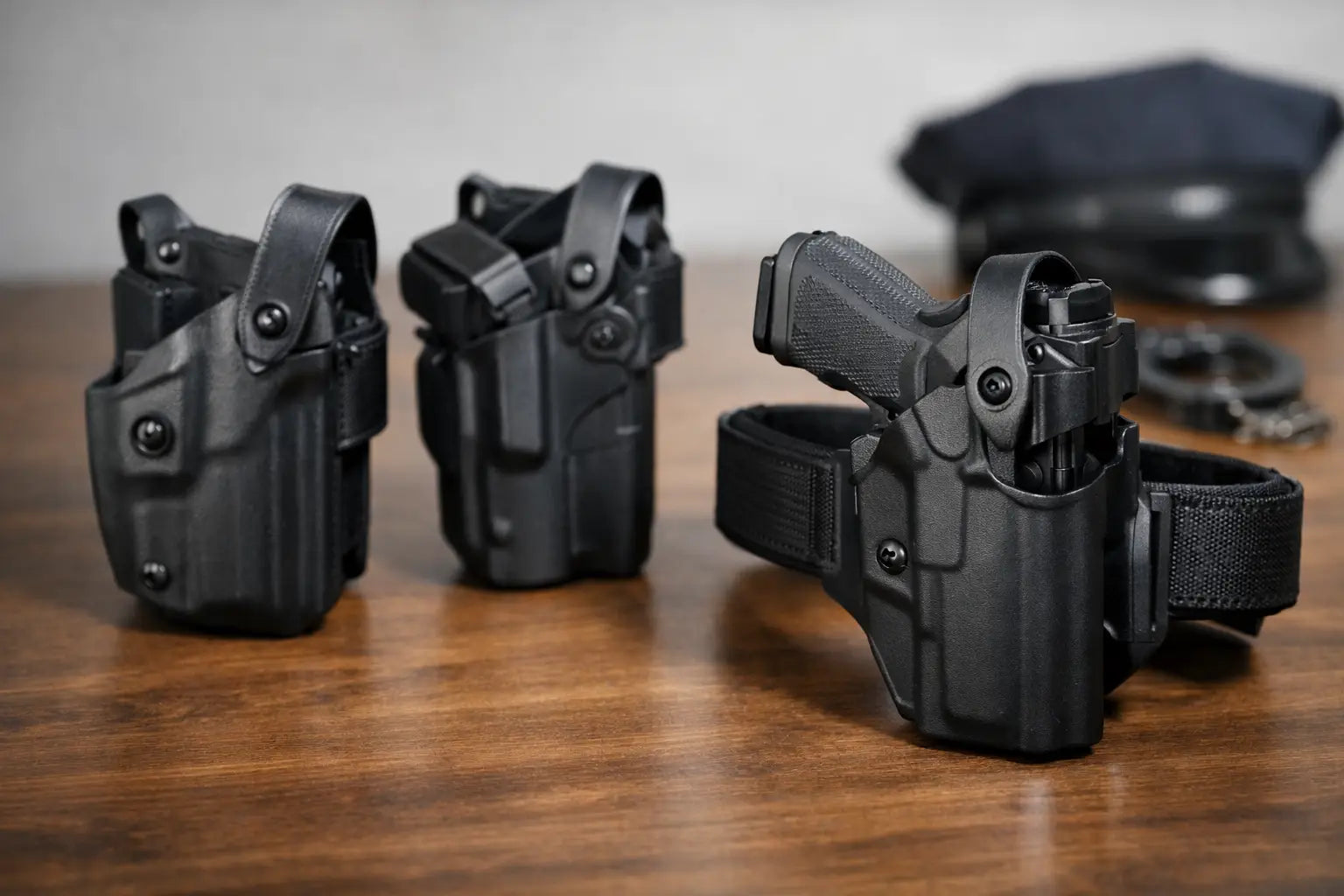
Retention usually falls into two broad categories: passive and active. Passive retention relies on friction or tension, often adjusted with a screw. Active retention adds a device such as a hood, thumb release, rotating guard, or locking mechanism that must be intentionally disengaged during the draw.
Many shooters use the common language of Level I, Level II, and Level III retention. While exact definitions can vary by manufacturer, the general idea is straightforward. Level I usually means one retention feature, often passive friction or a single active device. Level II typically adds another security measure. Level III adds a third layer, usually for higher-risk open carry or duty use.
That does not mean higher is always better. More retention can improve weapon security, but it can also increase draw complexity. If the release sequence is awkward for your hand size, duty gloves, or draw angle, your first shot slows down. Under stress, that matters.
Fit matters more than most buyers think
A retention holster is only as good as its fit to your exact handgun. Brand family is not close enough. A holster built for one model, light configuration, or optic cut may not properly secure another, even if the guns look similar.
You need to match the holster to the firearm make and model, barrel length, mounted weapon light, red dot, and sometimes even suppressor-height sights. If you carry a Glock 17 with a duty light and optic, buy for that exact setup. Trying to make a near match work can cause poor retention, inconsistent lockup, or interference during the draw.
This is especially important with active retention systems that lock on the ejection port or another precise point. If the gun does not seat exactly as designed, you may get a false sense of security. It may feel retained until movement, ground contact, or a weapon takeaway attempt proves otherwise.
Duty use versus concealed carry
For duty rigs, open carry security is usually the priority. Most patrol officers and many uniformed armed professionals are best served by active retention, commonly Level II or Level III depending on assignment and department policy. The goal is to secure the sidearm during physical movement, suspect contact, and public interaction without creating a drawstroke so complicated that it breaks down under pressure.
For concealed carry, the equation changes. Concealment itself adds a degree of protection against a gun grab because the pistol is not openly exposed. Many concealed carriers do well with strong passive retention, especially inside-the-waistband designs that hold the firearm securely and allow a clean, repeatable draw. Some may prefer active retention for open carry or certain off-duty roles, but bulk and concealability become trade-offs.
If your handgun will be exposed in public for extended periods, lean toward more retention. If your handgun is concealed and your priority is discreet access and daily comfort, simpler may be smarter.
How to choose retention holster features that work under stress
A good retention system should be secure, intuitive, and repeatable. The release should happen as part of a natural firing grip, not as a separate fine-motor task that needs perfect timing. If you have to shift your hand, hunt for a button, or apply pressure in an unnatural direction, expect problems in low light, on the move, or during a fight.
Thumb-driven releases are popular because they can integrate well with a standard drawstroke. Some systems use rotating hoods or locking levers that become very fast with training. Others may feel secure in the store but prove clumsy once you add body armor, winter gloves, or a vehicle seatbelt.
When evaluating features, ask simple questions. Can you defeat the retention consistently with either dry practice or supervised live-fire reps? Can you do it from awkward positions? Can you reholster safely without looking excessively or forcing the gun into the body?
Those details separate a duty-ready setup from one that only looks good on a product page.
Consider ride height, mounting platform, and body position
Retention is not just about the locking mechanism. Where the holster sits on the belt and how it mounts affects both security and draw speed. A high ride may conceal better but can be harder to access with armor or a longer torso. A low ride or mid-ride platform can improve access around body armor, but it may increase movement or printing depending on use.
For uniformed professionals, the mounting platform should support a stable draw and keep the handgun in a consistent position throughout a shift. If the holster shifts, rocks, or flares away from the body, the retention system is doing only part of the job. Stability matters just as much.
Vehicle time is another factor. A setup that feels excellent standing in a store may be miserable after hours seated in a patrol unit or security vehicle. Draw access from a seated position is worth thinking through before you commit.
Training has to match the holster
A higher-retention holster without regular practice is not a safety upgrade. It is just added complexity. If your role requires Level II or Level III retention, you need repetitions with that exact system until the release is automatic and clean.
This is also why switching holster platforms too often can be a bad idea for working professionals. Different release locations and motions create hesitation. If you run one setup on duty and another off duty, make sure the difference is intentional and understood. Muscle memory is useful only when it is consistent.
Departments and agencies should also factor training burden into purchasing decisions. A lower-cost holster is not the better value if the release system is harder to learn, slower to run, or less durable in field use.
Material, durability, and daily wear
Most retention holsters in duty and tactical roles use molded polymer or similar rigid materials for a reason. They hold shape, protect the trigger guard, and support reliable active retention mechanisms. Leather still has supporters, but for modern duty use with weapon lights, optics, and hard daily wear, rigid construction usually offers better consistency.
Look at edge finishing, hardware quality, and how well the holster resists sweat, abrasion, and repeated draws. A holster is not an accessory you baby. It gets bumped into door frames, exposed to weather, and worn for long shifts. Cracked mounting points or loosening hardware can turn a good design into a liability.
If you are buying for work, proven duty-grade construction is worth paying for.
A practical way to make the final choice
Start with your role and exposure level. Then match the exact firearm setup. After that, pick the lowest level of retention that still meets your real security needs, policy requirements, and operating environment. For many uniformed professionals, that means active retention. For many concealed carriers, strong passive retention is enough.
Then test the system honestly. Wear it with your actual belt, uniform, armor, and gear. Practice drawing from standing, seated, and movement positions. If the holster gives you clean access without sacrificing security, you are on the right track. If it feels like a compromise in all the wrong ways, it probably is.
AE Tactical serves customers who carry for real work, not just for photos. That makes this choice simple in one sense: buy for performance you can trust on your worst day, not features you may never need.
The right retention holster should disappear into your routine until the moment you need it, then do exactly what it is supposed to do.