Cart
0





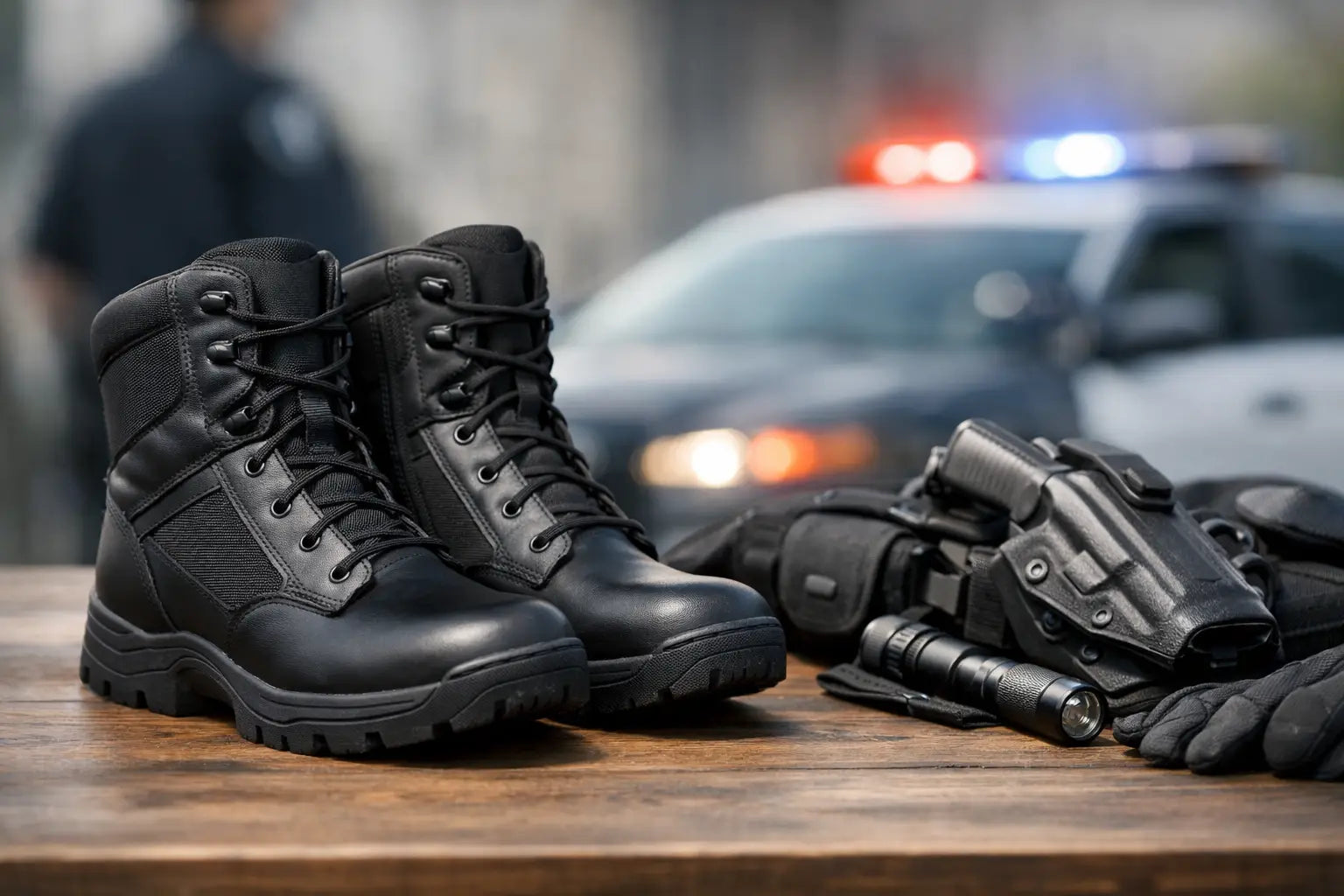
Your boots start working before the rest of your gear does. If they pinch on the first stairwell, slide on wet pavement, or break down halfway through a long rotation, you feel it all shift long. That is why knowing how to choose duty boots matters for law enforcement, security, corrections, fire, EMS, and anyone who spends real time on hard ground.
A good duty boot is not just about looking squared away. It has to match the job, the environment, and the number of hours you are actually on your feet. The right pair can reduce fatigue, improve traction, and hold up to daily abuse. The wrong pair can leave you with hot spots, knee pain, soaked socks, and a purchase you regret after one week.
How to Choose Duty Boots for Real-World Use
Start with the work, not the brand name. An officer spending most of a shift in and out of a patrol vehicle needs something different from a hospital security professional walking polished floors all day. A corrections officer dealing with concrete and constant movement has different priorities than an EMS worker moving through wet scenes and uneven surfaces.
That is where a lot of buyers get tripped up. They shop by appearance or by what a coworker wears, instead of by actual use case. A boot can be well made and still be wrong for your assignment. The best choice usually comes down to balancing comfort, support, weight, durability, and policy requirements.
Match the boot to the mission
If your day includes running, climbing, and quick directional movement, a lighter athletic-style duty boot may make more sense than a heavy traditional model. If you need more structure for extended standing, perimeter work, or rough outdoor conditions, a more supportive boot with a stiffer platform may serve you better.
Climate matters too. In South Florida heat and humidity, breathability can be just as important as durability. In wet environments, waterproofing sounds like an easy answer, but it comes with trade-offs. Waterproof membranes help keep water out, but they can also run warmer and dry more slowly if moisture gets inside.
Fit Comes First
You can compare features all day, but if the fit is off, the boot is off. Duty boots should feel secure through the heel and midfoot without crushing your toes. You need enough room in the toe box for natural movement, especially during long shifts when feet swell.
Try boots on with the socks you actually wear on duty. That sounds basic, but it changes the fit more than people expect. A boot that feels fine with a thin casual sock can become tight and uncomfortable with a thicker duty sock.
Pay attention to heel lift. A little movement can turn into friction, and friction turns into blisters fast. At the same time, do not mistake stiffness for support. Some boots feel tough in the store but never really break in well. Others start firm and mold to your foot after a few shifts. The key is whether pressure points show up right away.
What a proper fit should feel like
Your heel should stay planted when you walk. The forefoot should flex naturally where your foot bends. Toes should not hit the front on descents or stairs. If the boot feels cramped across the ball of the foot or loose enough to let you slide forward, keep looking.
If you use orthotics or supportive insoles, account for that before you buy. Some boots have removable footbeds that make customization easier. For many professionals, that can be the difference between decent comfort and all-day wearability.
Weight, Support, and Fatigue
A lighter boot usually feels better during the first ten minutes. A more supportive boot may feel better by hour ten. That is the trade-off.
Lightweight duty boots reduce leg fatigue and can help with speed and mobility. They are popular with patrol, security, and anyone covering a lot of ground indoors or on pavement. The downside is that ultra-light models sometimes give up long-term structure, lateral stability, or outsole life.
Heavier boots can offer more support, better protection, and stronger durability in demanding conditions. They can also feel bulky if your job requires frequent vehicle movement or fast footwork. The best option depends on whether your priority is agility, protection, or a balance of both.
Materials Matter More Than Marketing
Full-grain leather, synthetic panels, nylon uppers, waterproof liners, side zippers, slip-resistant outsoles - every feature has a purpose, but not every feature belongs on every boot.
Leather generally offers strong durability, polishability, and structure. It is a solid choice for uniform standards and professional appearance. Synthetic and nylon-heavy constructions can reduce weight and improve ventilation, but some models may show wear faster in high-abrasion use.
Side zippers are convenient, especially if you are gearing up quickly. They also add another component that can wear out over time if the boot is poorly built. A quality zipper can save time every day. A bad one becomes a failure point.
Waterproof or breathable?
This depends on your environment. If you regularly deal with rain, standing water, or unpredictable outdoor calls, waterproof boots may be worth it. If most of your shift happens in hot weather, vehicles, or indoor settings, a more breathable non-waterproof boot may keep your feet more comfortable.
There is no perfect answer here. Waterproof boots protect better in wet conditions, but they often run hotter. Breathable boots can be more comfortable in heat, but they will not forgive a flooded scene or sudden downpour.
Outsole Grip and Stability
Traction is one of the easiest things to overlook in a showroom and one of the hardest to ignore in the field. Smooth hospital floors, wet sidewalks, stairwells, gravel lots, and oily pavement all challenge outsoles differently.
Look for a tread pattern that fits your actual terrain. Deep aggressive lugs can perform well outdoors but may feel less stable on some indoor surfaces. A flatter slip-resistant outsole may be ideal for mixed urban work, especially if your day involves tile, concrete, and vehicle entry.
Stability also matters during lateral movement. If you move quickly, pivot often, or carry weight on your belt or vest, a boot with better ankle support and a stable platform can help reduce strain. That does not mean everyone needs a tall rigid boot. It means the sole, heel hold, and overall structure should match the way you move on duty.
Safety Features and Policy Requirements
Before you narrow the field too much, check your department or employer requirements. Some agencies specify polishable toe caps, minimum height, color, or safety toe standards. Others may prohibit certain styles, including overly athletic-looking boots.
If you work around heavy equipment, hazardous materials, or sharp debris, reinforced toe protection or puncture resistance may be necessary. For electrical hazard concerns or slip-prone environments, those ratings should be part of the decision, not an afterthought.
This is also where buying from a specialized tactical outfitter helps. Public safety professionals usually need gear that is not just comfortable, but compliant and ready for the job.
Durability Is About Construction, Not Claims
Every brand talks about toughness. The real question is where the boot tends to fail. Look at the stitching, outsole attachment, eyelets, zipper quality if present, and the way the upper flexes. Stress points around the toe crease and heel collar tell you a lot.
If you rotate through one pair every day for long shifts, durability matters more than sticker price. A cheaper boot that breaks down early is not actually cheaper. On the other hand, paying more only makes sense if the materials and construction support the cost.
Professionals who work daily in uniform usually do better with boots built for repeated duty wear rather than crossover hiking or casual tactical styles. Those can work for some users, but they are not always designed around the demands of public safety shifts.
Break-In Time and Expectations
Some duty boots are comfortable out of the box. Others need a measured break-in period. Neither is automatically better, but you should know what you are getting into.
Do not wear a brand-new pair for a full shift without testing them first. Walk in them indoors, use your usual socks, and check for rubbing or pressure spots. If the boot has quality structure and the fit is right, a short break-in is normal. If it hurts in multiple places from the start, it is probably not the right boot.
When to Replace Your Duty Boots
A boot does not need a hole in it to be done. If the outsole is worn smooth, support has collapsed, or cushioning feels dead, performance is already compromised. That can show up as foot fatigue, joint pain, reduced traction, or less stability.
If your boots are part of your daily uniform, inspect them the same way you inspect other mission-critical gear. The right time to replace them is before they become a problem on shift.
AE Tactical serves professionals who cannot afford to guess wrong on equipment. That applies to boots as much as body armor, lights, or holsters. The best pair is the one built for your actual assignment, fits correctly, and keeps performing when the shift gets longer than expected.
Choose for the miles, not the mirror.