Cart
0





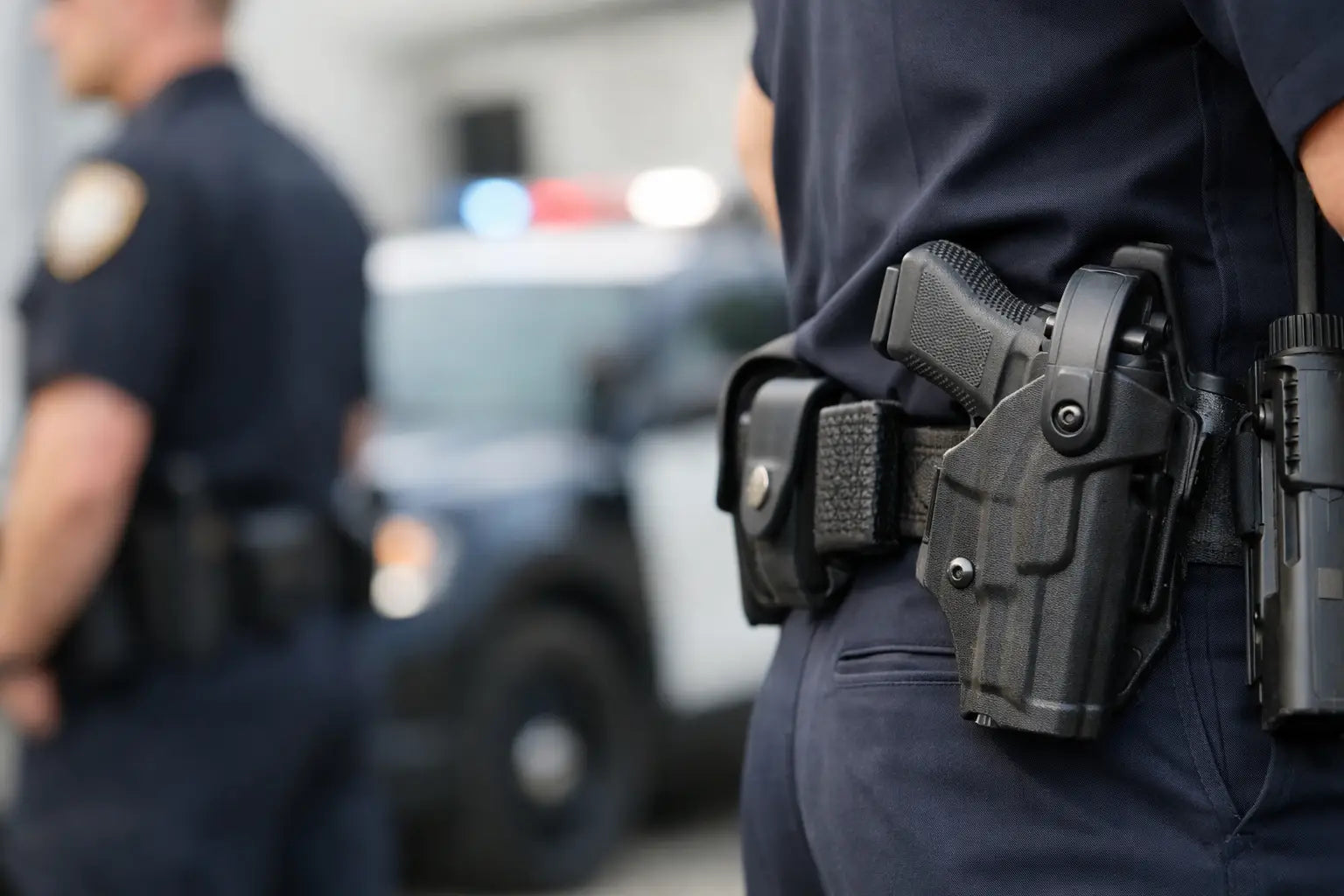
A duty holster gets judged in the worst moments, not on the shelf. When a holster rides badly, slows the draw, interferes with body armor, or fights your movement in and out of a patrol unit, you feel it every shift. Finding the best duty holster for law enforcement means balancing security, access, comfort, and policy compliance without guessing.
What makes the best duty holster for law enforcement?
The short answer is retention, fit, and consistency under stress. The longer answer is that the right holster depends on your assignment, your sidearm, your department requirements, and how much time you spend standing post versus driving, clearing buildings, or working details.
A good duty holster has to lock the pistol in place during movement, weapon retention attempts, and ground fights. At the same time, it cannot force awkward hand placement or add unnecessary steps to the draw. Officers do not need a holster that feels impressive at the counter and becomes a liability at hour ten of a long shift.
Material matters, but design matters more. Most serious duty holsters today use rigid polymer constructions because they keep their shape, resist weather, and support repeatable draws and reholstering. Leather still has some supporters, especially among officers who like a traditional feel, but polymer has become the standard for a reason - durability, consistency, and cleaner retention system integration.
Retention level comes first
If you are evaluating the best duty holster for law enforcement, start with retention before anything else. Most duty applications call for active retention, not just passive friction. That means the gun stays secure until the officer intentionally defeats the retention mechanism during the draw.
Level II and Level III retention are common duty benchmarks, although the exact naming can vary by manufacturer. In practical terms, you are looking at how many deliberate actions are required to release the firearm. More retention usually means more security, especially in close-contact situations, but there is always a trade-off. Extra retention can slow the draw if the design is poorly executed or if training time is limited.
That is why the best setup is not automatically the one with the highest complexity. A patrol officer working street assignments may want a strong Level III system with a well-practiced draw path. A courthouse or corrections professional may prioritize maximum security in tighter-contact environments. An officer in a lower-risk role may still need active retention but may value a simpler release system for faster, cleaner access. Policy should always come first, but practical fit still matters inside those rules.
Fit to the firearm is non-negotiable
A duty holster should be built for the exact handgun model, and if applicable, the exact weapon light and optic combination. Close enough is not good enough here. A holster molded for one pistol variant may not properly secure another, even if the guns look nearly identical.
This gets more important as more agencies authorize red dot optics and weapon-mounted lights. A holster that does not fully account for those accessories can affect retention, drag during the draw, or leave the optic exposed to unnecessary impact. If your pistol is cut for an optic or wears a duty light, the holster should be designed around that setup from the start.
Fit also affects safety and reholstering. A duty holster should allow one-handed reholstering without collapsing, binding, or forcing the user to look down longer than necessary. In real work, that matters.
Ride height and mounting change everything
Many officers focus on the shell and retention hood, then overlook how much the mounting platform changes daily performance. Ride height, cant, and offset affect draw speed, seated comfort, and access around armor or outer carriers.
A high-ride setup can feel tighter to the body and work well for some uniforms and body types, but it may crowd armor or restrict a full firing grip before the draw. A mid-ride option often gives a better balance for patrol use because it lowers the pistol enough to clear gear while still keeping it controlled and stable. Drop configurations can help with access, especially when armor and belts stack up, but too much drop can create swing, printing, or unnecessary bulk.
This is one of those areas where there is no universal winner. The best duty holster for law enforcement is often the one paired with the right mounting system for the officer's gear layout. Long hours in a vehicle, external vest carriers, and baton or Taser placement all affect what works.
Comfort is a performance issue
No one buys a duty holster for comfort alone, but comfort still affects performance. If a holster digs into the hip, shifts on the belt, or creates hot spots during long vehicle time, the officer starts compensating. That compensation can lead to poor belt setup, inconsistent draw mechanics, or simple fatigue over time.
A stable platform matters more than softness. Duty gear is not supposed to disappear, but it should distribute weight cleanly and stay in place during movement. Belt width compatibility, mounting hardware quality, and overall holster profile all contribute to whether the setup feels planted or sloppy.
For officers working full patrol shifts, that stability shows up in a hundred small moments - getting in and out of the unit, kneeling, running, bending, and clearing seat belts without snagging the grip.
Brand reputation matters, but only after the fundamentals
Recognized duty holster brands have earned their place because they build around retention testing, hard-use materials, and duty-specific fitments. That matters. An authorized dealer with a strong tactical catalog can also help narrow the field because not every holster marketed to gun owners is built for law enforcement use.
Still, brand alone should not make the decision. A respected manufacturer can still produce a model that does not suit your assignment or department standards. The right question is not which brand is most popular. It is which model fits your exact handgun, retention requirement, mounted accessories, and duty role.
For many public safety professionals, shopping through a specialized outfitter like AE Tactical helps because the product mix is already centered on real duty use rather than general shooting accessories.
Common mistakes when choosing a duty holster
The biggest mistake is buying for the range instead of the job. A fast, minimalist holster may feel great in training but fail duty retention requirements immediately. Another common issue is underestimating how much lights and optics affect fit. Officers often upgrade the pistol first and then realize the old holster no longer supports the setup.
There is also the problem of ignoring the full belt ecosystem. A holster does not work in isolation. Magazine pouches, radios, cuffs, less-lethal tools, and body armor all compete for space. A holster that looks ideal by itself can become awkward once it is placed into a real duty layout.
Finally, many buyers do not spend enough time on draw practice after changing platforms. Even the best duty holster for law enforcement is only as effective as the officer's repetitions with that specific retention system.
Patrol, security, and corrections have different needs
Law enforcement is not one single use case. Patrol officers usually need a balance of strong retention, all-day comfort, and fast access in and around vehicles. Private security professionals may need similar retention standards, but appearance, uniform profile, and client-site requirements can play a bigger role. Corrections and detention personnel often face more close-contact weapon retention concerns and may prioritize maximum security over pure draw speed.
That means recommendations should always be filtered through the assignment. The right holster for a road deputy may not be the right holster for an armed security supervisor working a fixed post or for a transport officer spending long hours seated.
How to narrow your choice quickly
Start with agency policy and approved holster standards. Then confirm your exact handgun model, barrel length, weapon light, and optic configuration. After that, decide what ride height works with your armor and belt setup. Only then should you compare specific holster models.
If you are between two retention systems, be honest about your environment and your training time. More security is valuable, but only if you can access the firearm consistently under stress. If possible, think through your real day, not your ideal one. Vehicle time, foot pursuits, close-contact calls, courthouse screening, and overtime details all put different demands on the same piece of gear.
The best duty holster for law enforcement is not the one with the most features on paper. It is the one that secures your sidearm, clears your gear, supports a repeatable draw, and holds up shift after shift without becoming something you have to fight. Choose for the work you actually do, and the rest of your belt setup gets easier from there.