Cart
0





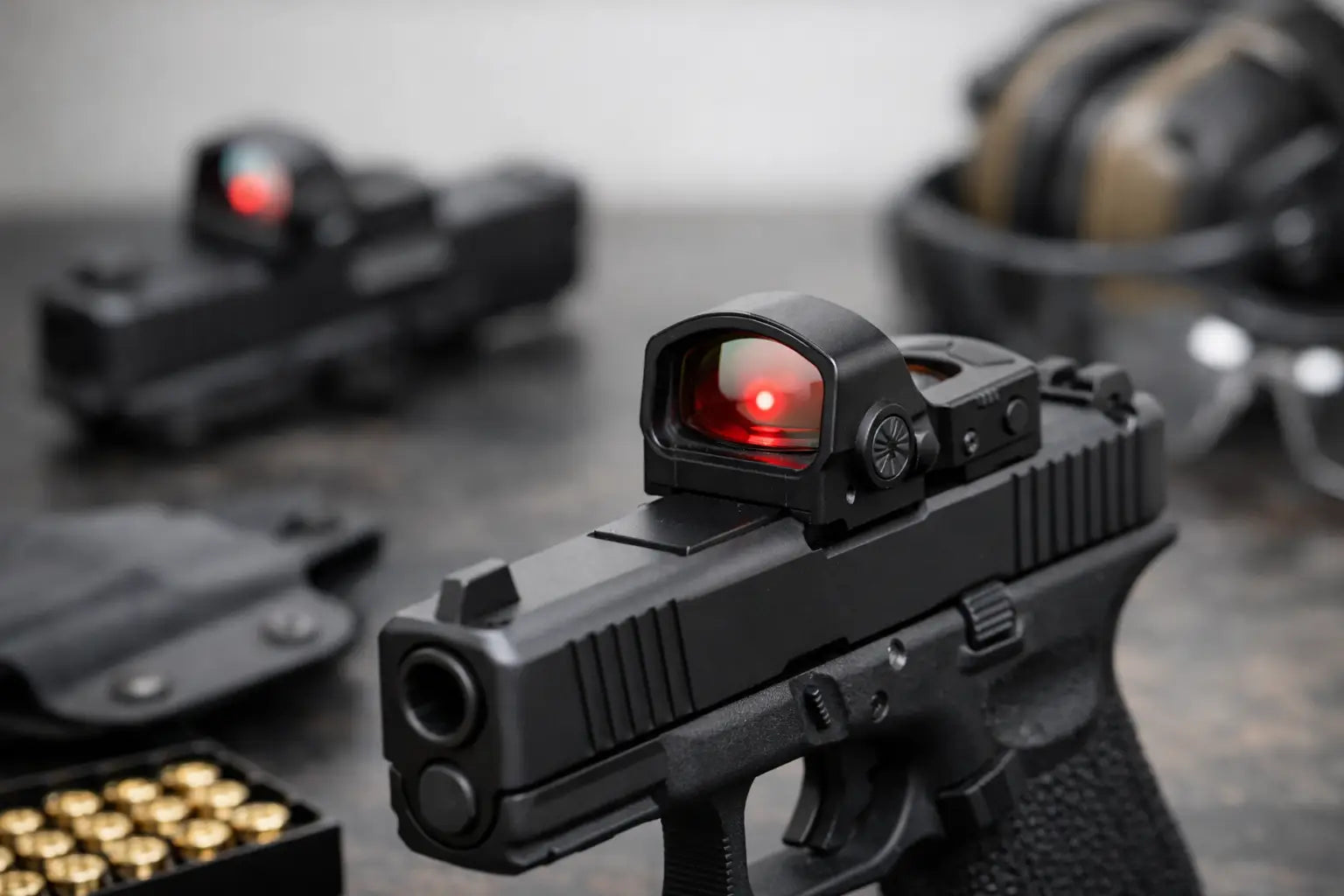
A missed dot on the draw costs time you do not have. That is why choosing the right red dot sight for pistol use is less about chasing features and more about matching the optic to the job, the handgun, and the way you actually train.
Pistol-mounted optics have moved from niche upgrade to serious working option. For law enforcement, security, and dedicated range users, a red dot can improve target focus, speed up follow-up shots, and help maintain precision under pressure. But those gains only show up when the optic is durable, correctly mounted, and realistic for your use case.
Why a red dot sight for pistol setups keeps gaining ground
Traditional iron sights require the shooter to align rear sight, front sight, and target. A pistol optic simplifies that visual task by letting you stay target-focused while placing a single aiming point where the shot needs to go. In practical terms, that can mean faster sight confirmation, better performance at distance, and a cleaner sight picture in mixed lighting.
That does not mean a red dot is automatically better for everyone on day one. New users often spend the first few sessions hunting for the dot during presentation. The optic can also add cost, require a compatible slide cut or adapter plate, and introduce another battery-powered component into a fighting handgun. Those are manageable trade-offs, but they are still trade-offs.
For duty and defensive use, the question is not whether pistol dots work. They do. The better question is whether a specific optic can hold zero, survive impact, and support consistent performance in real-world conditions.
What matters most in a red dot sight for pistol selection
The first priority is reliability. A pistol optic gets slammed back and forth under recoil, exposed to sweat, lint, rain, carbon, solvents, and rough handling. That puts very different demands on it than a dot riding on a rifle. If the housing is weak, the emitter is exposed to constant debris, or the electronics are inconsistent, it will show up fast.
Window size is the next major factor. A larger window can make it easier to acquire the dot during the draw and track it during recoil. That can be especially helpful for newer dot users or for duty applications where speed matters. The trade-off is bulk. A larger optic may print more on a concealed setup and may not be the best fit for every holster.
Reticle choice also matters more than some buyers expect. A simple 2 MOA or 3 MOA dot gives precise aiming at distance. A larger 6 MOA dot tends to be easier to pick up quickly at closer ranges. Some optics offer multi-reticle systems that combine a dot with a circle. That can help with fast acquisition, but not every shooter wants extra visual information in the window.
Battery life and battery access should not be treated as small details. If the battery must be changed from the bottom, the optic usually has to come off the slide, which means reinstallation and often zero confirmation. A side or top battery tray is simply more convenient for a hard-use pistol. Long battery life is valuable, but easy maintenance is part of readiness too.
Brightness controls deserve attention as well. Auto-adjust settings can work well, but manual override is often preferred by shooters who move between indoor and outdoor environments, vehicle operations, and handheld or weapon-mounted white light use. A dot that blooms badly or disappears against a bright target becomes a liability.
Open emitter vs. enclosed emitter
This is one of the most important decisions in the category. Open-emitter optics are common, proven, and usually lighter and more compact. They work well for range guns, many concealed carry pistols, and general-purpose use. They are also available in a wider range of footprints and price points.
Enclosed-emitter optics seal the emitter inside the housing, which gives better protection against water, lint, mud, and debris. For duty use, security work, and humid environments like South Florida, that added protection has real value. If your pistol rides in and out of vehicles, works long shifts outdoors, or gets exposed to heavy sweat and weather, enclosed designs are worth serious consideration.
The trade-off is size and cost. Enclosed optics tend to be larger and more expensive. On a compact carry pistol, that may matter. On a duty handgun, the extra protection often justifies the added footprint.
Mounting, footprint, and co-witness concerns
An optic is only as dependable as its mounting system. Before buying, confirm your slide cut, optic footprint, and screw compatibility. A quality dot mounted on the wrong plate system or with incorrect screws can fail even if the optic itself is excellent.
Direct-mount setups generally offer a lower profile and fewer points of failure than adapter plate systems. That lower mounting height can also improve dot acquisition and co-witness with backup irons. Plate systems still have their place, especially when agencies need flexibility across optic models, but they require careful attention to fit and torque specs.
Backup iron sight compatibility matters because electronics can fail, lenses can break, and visibility can be compromised. Many shooters prefer a lower-third co-witness that keeps irons available without cluttering the window. Full co-witness can work, but some find it too busy on a pistol optic.
Holster fit also needs to be part of the plan. Not every holster clears every optic, and suppressor-height sights can affect compatibility too. If the pistol is for duty or daily carry, the optic choice should support the complete system, not just the slide.
Duty, concealed carry, and range use are not the same job
A duty pistol optic should prioritize durability, emitter protection, consistent brightness performance, and secure mounting. It also needs to survive repeated presentations from a duty holster, contact with barricades, weather exposure, and long service intervals. Proven track record matters here more than chasing the newest release.
For concealed carry, size and snag profile become more important. A smaller open-emitter optic may be the better fit if it keeps the gun easier to conceal while still giving you the speed advantage of a dot. Battery life remains important, but bulk and comfort matter more in this lane than they do on a full-size duty rig.
A range pistol gives you more flexibility. Bigger windows, larger dots, and competition-oriented features can all make sense if the pistol is used for training, qualification prep, or recreational shooting. Just be careful about assuming a competition-friendly optic is automatically a duty-ready optic. Those are not always the same standard.
Training is what makes the optic pay off
A pistol dot rewards good presentation and exposes sloppy mechanics. If your draw is inconsistent, the dot will seem hard to find. That is usually not the optic's fault. It is feedback.
Most shooters adapt quickly when they stop fishing for the dot and focus on bringing the pistol to the same index every time. Dry fire helps a lot here. So does learning to track the dot through recoil instead of waiting for the sight picture to rebuild from scratch after every shot.
There is also a learning curve in target transitions and unconventional shooting positions. Once trained, many shooters find the dot gives them better information at distance and better accountability on partial targets. But the gain comes from repetition, not from simply mounting an optic and expecting instant improvement.
Where buyers get it wrong
The most common mistake is buying based on price alone. A pistol optic that loses zero, drains batteries unpredictably, or cracks under normal use is not a bargain. It is wasted money and avoidable downtime.
Another mistake is choosing the largest window available without considering concealment, holster fit, or slide balance. Bigger is not always better. It depends on whether the pistol is for patrol, plainclothes work, home defense, or range use.
Buyers also overlook service support. With optics, warranty reputation, parts availability, and dealer support matter. Working professionals need gear that can be replaced, serviced, or verified without a drawn-out process. That is one reason many buyers prefer shopping with a specialized outfitter like AE Tactical instead of a general sporting goods source.
How to narrow your choice with confidence
Start with the pistol's intended role. If it is a duty gun, lean toward proven durability and enclosed protection if your environment justifies it. If it is a concealed carry pistol, prioritize compact size, reliable battery management, and compatible holster support. If it is a range or training gun, think about window size, dot clarity, and how the optic supports your practice goals.
Then confirm the footprint and mounting path, decide whether you want simple dot or multi-reticle capability, and consider how you will maintain the optic over time. Battery changes, zero checks, lens cleaning, and backup sights are all part of owning a pistol dot.
A good red dot sight for pistol use should make the gun more capable without making your setup more fragile. When the optic fits the handgun, the mission, and the shooter, it stops feeling like an accessory and starts feeling like standard equipment.
The right choice is usually the one you trust enough to train with hard, carry with confidence, and depend on when speed and accountability both matter.