Cart
0






A missed uniform item does not stay small for long. One officer shows up without the approved outer carrier, another new hire is still waiting on pants in the right size, and a supervisor ends up chasing invoices instead of managing the shift. That is where an agency uniform purchasing program earns its place. For law enforcement, security, fire, and EMS teams, the goal is not just ordering apparel. It is keeping personnel compliant, presentable, and ready for work without turning every replacement or new issue into a separate problem.
What an agency uniform purchasing program should actually solve
At the agency level, uniform buying gets complicated fast. Sizes vary, approved brands differ by role, and replacement cycles never line up neatly with the budget calendar. A good program creates order around those moving parts. It gives procurement teams a defined process for standard issue, replacement items, seasonal needs, and specialized assignments.
The strongest programs also reduce the day-to-day friction for supervisors and quartermasters. Instead of relying on scattered spreadsheets, one-off store visits, or repeated phone calls to confirm availability, the agency has a structured way to manage approved products and purchasing rules. That matters because uniforms are not a side category. They affect appearance standards, comfort on duty, and how quickly a new hire can step into the field.
An agency uniform purchasing program should also support the real conditions your personnel work in. Patrol, corrections, private security, fire rescue support, and administrative assignments all carry different wear patterns and performance requirements. A dress uniform shirt and a patrol-class ripstop uniform do not belong in the same buying conversation unless the program is built to separate those needs clearly.
Why agencies move away from one-off uniform ordering
Buying uniforms one order at a time can work for a very small team. It starts to break down once headcount grows, turnover picks up, or multiple ranks and divisions need different approved items. The biggest issue is not always price. It is inconsistency.
Without a defined purchasing program, agencies often see avoidable problems. Personnel order the wrong model, buy non-approved colors, miss department standards, or end up with substitutions that create appearance issues across the unit. Procurement then has to fix mistakes after the fact, which costs more than getting the order right the first time.
Speed is another factor. Public safety and security operations do not always have the luxury of waiting through a slow, back-and-forth ordering process. New hires need complete kits. Recruits graduate on a date that does not move. Damaged uniform items need replacement before the next rotation, not whenever a vendor finally responds.
That is why many agencies prefer working with an authorized dealer that understands duty wear, agency approvals, and the difference between a retail clothing order and an operational uniform order.
Core parts of a reliable agency uniform purchasing program
A solid program is usually built around a few practical controls. First is approved product selection. Agencies need a defined set of shirts, pants, outerwear, boots, and accessories that meet policy and match the working conditions of the assignment. If too many choices are left open, standardization gets weak.
Second is size management. This is one of the most overlooked parts of uniform purchasing. The wrong fit affects appearance, comfort, and mobility, but it also drives returns, delays, and duplicate orders. Agencies with a repeatable sizing process usually waste less time and money.
Third is budget visibility. Some organizations issue a full kit at hire and then move to an annual replacement allowance. Others buy by division or by fiscal quarter. The program should support that structure instead of forcing every order into the same format. A security company with frequent onboarding may need a fast, repeatable issue process, while a municipal department may care more about bid alignment, account controls, and documented approvals.
Finally, the program needs responsive support. Even the best product list cannot prevent every issue. Sizes change. Items go on backorder. Policy updates happen. Agencies need a point of contact who can help resolve those issues without slowing down the whole process.
Building an agency uniform purchasing program around policy
A common mistake is building the program around what is easy to stock instead of what the agency actually requires. Policy has to come first. That includes approved colors, materials, insignia placement, seasonal wear rules, and any job-specific requirements such as cargo pocket configurations or outerwear compatibility with body armor and duty gear.
This is especially important for agencies with multiple assignments. Patrol officers, bike units, event security, school resource personnel, and command staff may all have different standards. If the purchasing program does not reflect those differences, people improvise. That is when inconsistencies show up.
The better approach is to create approved categories by role. Keep the selection focused, but not so narrow that personnel cannot get the correct fit or function. For example, offering one or two approved pant options may make sense if one cut works better with boots and field movement while another better fits administrative or supervisory use. The key is controlled flexibility, not unlimited choice.
Cost control matters, but so does wear life
Uniform programs are often judged on upfront pricing. That is understandable, especially when budgets are tight. But low unit cost is only one part of the equation. If a cheaper uniform fades quickly, loses structure, or fails under normal duty wear, the replacement cost erases the initial savings.
That is why agencies should look at total use value. Fabric weight, stitching, reinforcements, wash durability, and consistent sizing all affect how long a garment stays serviceable. A program that helps your team buy the right product once can save more than one that only advertises a lower starting price.
There is also a balance between standardization and comfort. If the uniform is technically compliant but performs poorly in heat, limits movement, or creates constant fit complaints, replacement requests will rise. South Florida agencies and private security teams know this well. Climate, shift length, and field activity change what makes a uniform practical.
What procurement buyers should ask before choosing a program
The right questions are usually operational, not promotional. Can the vendor support agency-specific product approvals? Can they handle recurring orders and new-hire outfitting without confusion? Do they understand the difference between dress, duty, and tactical uniform needs? Can they help with sizing and replacements in a way that reduces downtime?
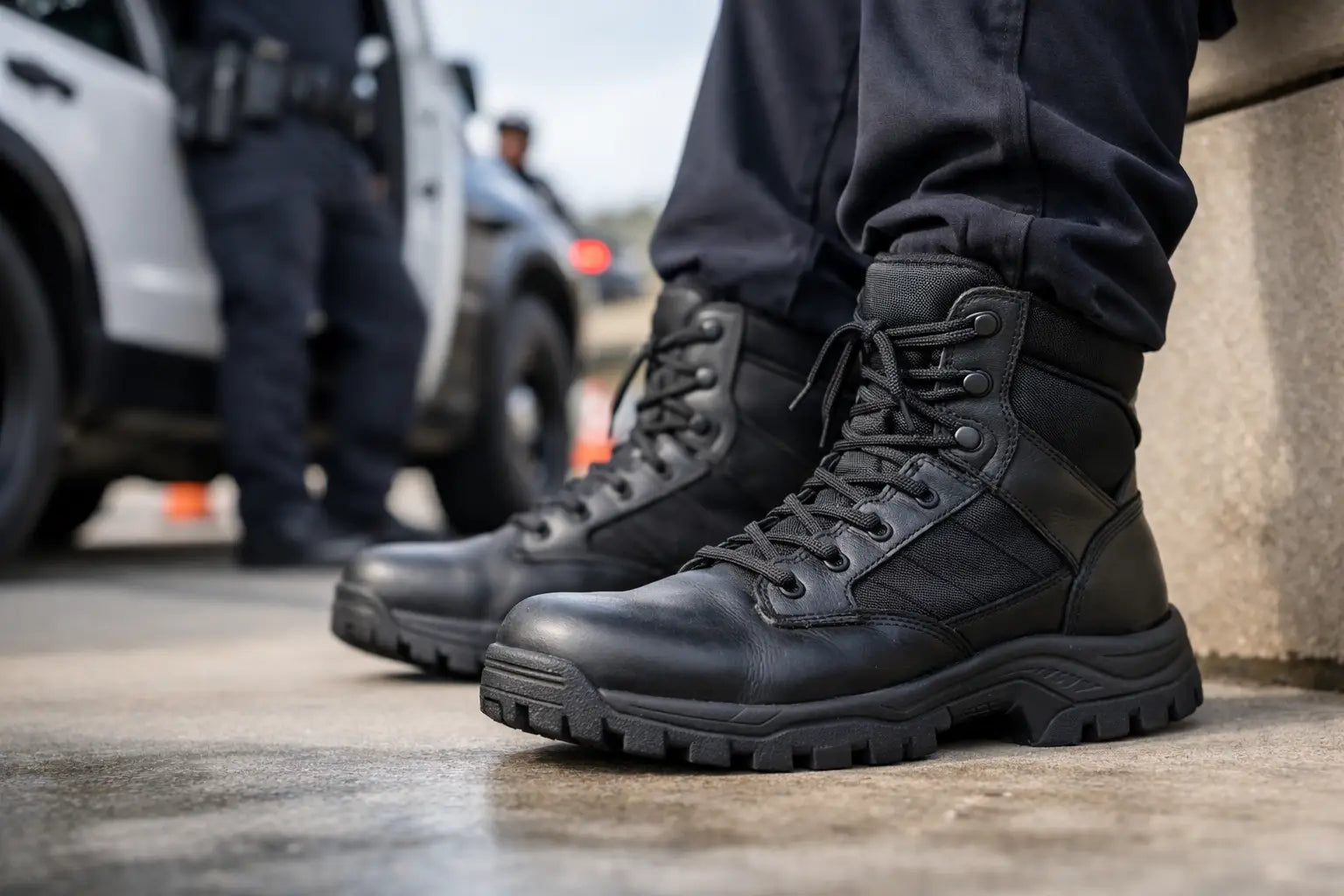
Inventory depth matters too, but so does product mix. An agency may not need the broadest catalog if the core approved items are not available consistently. At the same time, a vendor that only handles basic uniform apparel may create another issue when the agency also needs duty boots, belts, outer carriers, or related equipment. Consolidation is helpful when it reduces purchasing complexity, but only if the supplier understands public safety requirements.
Service is where a lot of programs either hold up or fall apart. Agencies need clear communication on lead times, substitutions, discontinued items, and backorder options. A provider that supports agency sales with practical answers can keep the purchasing process moving when conditions change.
When a local and online approach works best
For many agencies, especially those with both planned and urgent needs, a hybrid buying model works well. Online access helps with repeat purchasing, approvals, and broader product visibility. A physical store presence can help with sizing, trying on core uniform pieces, and resolving fit issues before they become return problems.
That combination can be especially useful for South Florida departments and companies that want local support but still need fast, dependable fulfillment. AE Tactical serves that kind of buyer with agency sales support, authorized dealer access, and a product mix built around real duty requirements rather than generic apparel retail.
A program should make readiness easier
The best agency uniform purchasing program does not call attention to itself. It simply keeps your people properly outfitted, your standards consistent, and your purchasing process under control. When uniforms fit right, meet policy, and arrive when needed, supervisors can focus on operations instead of chasing basic supply issues.
If your current process creates repeat errors, inconsistent appearance, or too much manual follow-up, that is usually a sign the program needs work. Uniform purchasing should support readiness, not compete with it. Build the process around the mission, and the rest gets easier to manage.