Cart
0





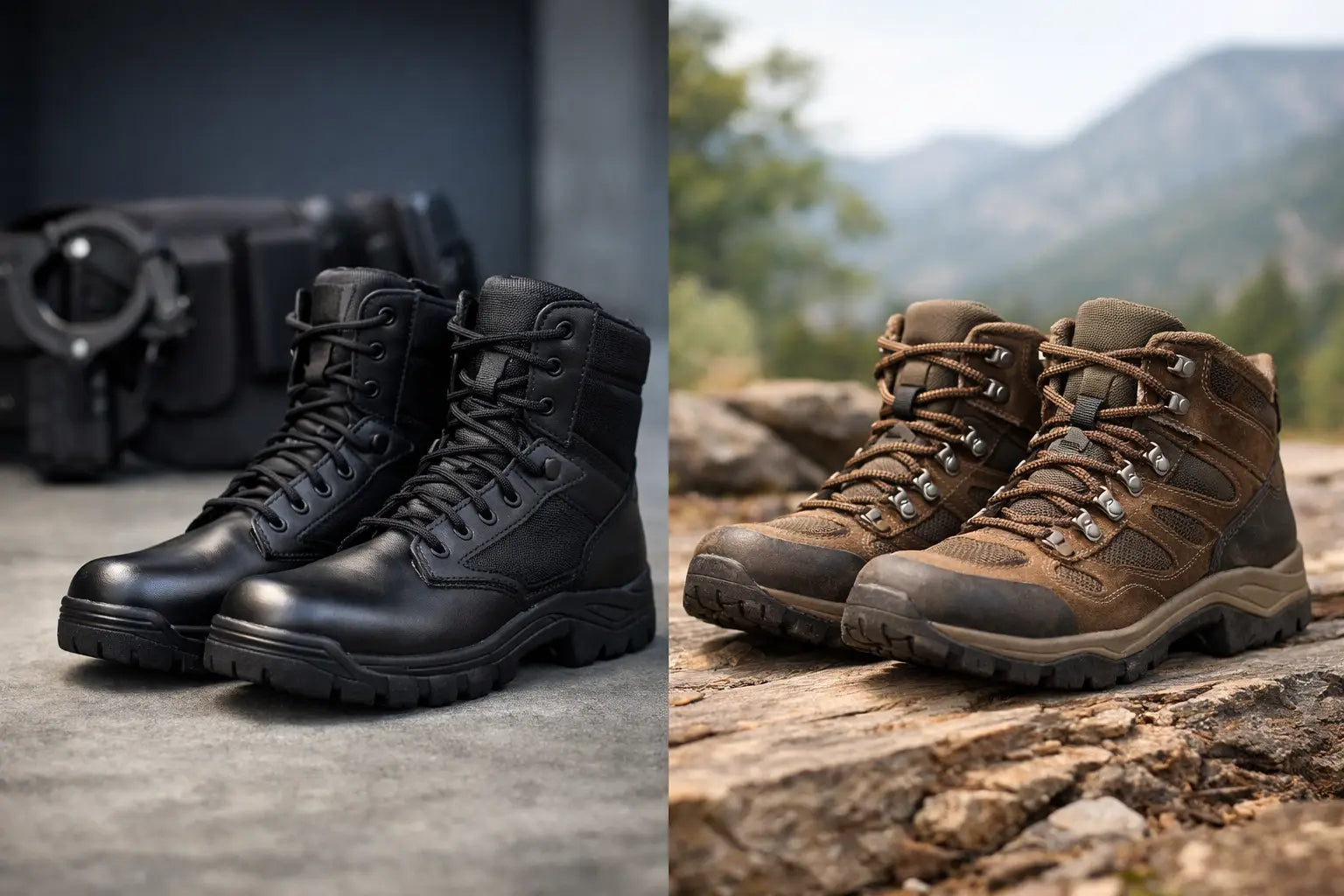
A long shift on concrete, a foot pursuit across wet grass, and a quick stair climb with gear on your belt will expose weak footwear fast. That is why the duty boots vs hiking boots question matters more than many buyers think. On the surface, both look rugged. In actual field use, they are built for different jobs.
For law enforcement, security, corrections, and many EMS or fire support roles, the wrong boot is not just uncomfortable. It can affect traction, stability, speed, uniform compliance, and how your feet hold up by hour ten. For outdoor recreation, hiking boots can be an excellent choice. For patrol or professional use, they often miss the mark in ways that show up quickly.
Duty boots vs hiking boots: the core difference
Duty boots are designed around operational work. That means long wear times, repeated movement on pavement and mixed surfaces, compatibility with uniforms, and support under load from belts, vests, or other equipment. They are built for predictable performance during repetitive, high-demand workdays.
Hiking boots are designed around trail travel. Their priority is covering uneven terrain with comfort, grip, and weather protection over distance. They often perform very well on dirt, rock, and elevation changes, but that does not automatically make them ideal for professional duty environments.
The biggest mistake buyers make is assuming rugged equals interchangeable. It does not. A boot that feels great on a weekend trail can become a problem on a 12-hour shift.
Where duty boots usually win
On-duty footwear has to work in more than one environment. One hour may involve vehicle time, then standing on asphalt, then moving through a slick entryway, then walking a perimeter in grass or gravel. Duty boots are built with that kind of transition in mind.
The outsole is one of the first areas where the difference shows. Duty boots usually aim for traction across urban and mixed-use surfaces, including concrete, tile, pavement, and occasional dirt. Hiking boots often use deeper, more aggressive lug patterns that shine on loose terrain but can feel clunky or wear differently on hard daily surfaces.
Support is another major factor. Duty boots are commonly engineered for lateral stability and all-day wear under occupational load. That matters when you are carrying a duty belt, medical gear, magazines, cuffs, or other equipment. Hiking boots support the foot differently. They are often tuned for forward movement and trail mechanics, not repeated quick pivots, kneeling, or sprinting on manmade surfaces.
Then there is the issue of appearance and policy. Many agencies, departments, and private security employers require specific colors, toe styles, or polishable finishes. Plenty of hiking boots fail before performance is even considered because they do not meet uniform standards.
When hiking boots make sense
Hiking boots are not wrong. They are just purpose-built for a different lane.
If your use is recreational, off-duty, or centered on extended trail walking, hiking boots can offer strong comfort, weather resistance, and terrain grip. They also tend to appeal to buyers who prioritize cushioning and outdoor versatility over professional appearance.
For rural property work, hunting access, or general outdoor wear, many hiking boots are excellent. Some users also prefer hiking-style comfort for light-duty tasks where there is no uniform policy and no need for duty-specific features. But that is a narrower use case than most public safety professionals need.
If your day involves report writing in the car, standing posts, walking concrete hallways, moving through parking lots, and responding quickly when needed, a true duty boot is usually the safer bet.
Comfort is not just about cushioning
A lot of buyers try on a hiking boot and think, this feels softer, so it must be better. That can be misleading.
Initial softness is only one part of comfort. Shift-long comfort depends on how the midsole holds up, how the heel stays locked in place, whether the boot creates hot spots, and how the upper manages movement over hours of wear. A hiking boot may feel great in the first ten minutes and less stable by mid-shift.
Duty boots are often less plush out of the box, but better tuned for occupational repetition. That includes side-to-side movement, frequent stop-and-go walking, stair travel, and getting in and out of vehicles. Some models also balance athletic feel with duty-grade structure, which is why many professionals now prefer lightweight duty boots over older, heavier designs.
That said, comfort still depends on the individual. Foot shape, arch needs, body weight, and the amount of gear you carry all matter. There is no universal winner. There is only the right boot for your work pattern.
Durability depends on the type of abuse
Hiking boots and duty boots both advertise durability, but they are not always built to resist the same wear.
Hiking boots often focus on abrasion from rock, dirt, roots, and weather exposure. Duty boots may be better reinforced for toe wear, repeated flex on pavement, contact with pedals, friction from kneeling, and the strain of daily uniform use. If you work around concrete edges, curbs, stairs, and vehicles, that wear pattern is different from a mountain trail.
The upper materials matter here. Full-grain leather duty boots can offer a more professional look and strong long-term resilience, especially where polishability is required. Nylon and synthetic panels can reduce weight and help breathability, but they may trade off some structure or long-term abrasion resistance depending on the build.
Hiking boots often use mesh-heavy constructions to improve ventilation and reduce weight. That can be a plus outdoors, but in duty settings it may be less ideal if you need a more uniform appearance, better protection, or easier cleanup after messy calls.
Waterproofing, breathability, and hot-weather reality
A waterproof membrane sounds great until you are halfway through a humid South Florida shift and your feet feel trapped. This is where buyers need to think past marketing terms.
Waterproof duty boots can be valuable if your work regularly puts you in wet environments. The trade-off is heat retention and reduced breathability. In hot climates, many professionals are better served by a non-waterproof boot that breathes well and dries faster.
Hiking boots often lean heavily into waterproof versions because trail users may spend hours in wet grass, shallow mud, or changing mountain conditions. That makes sense on the trail. It may not be the best daily choice for a patrol officer, security professional, or range user working mostly in heat and hard surfaces.
There is no perfect answer here. If you deal with frequent rain, standing water, or soaked ground, waterproofing earns its place. If your bigger issue is heat, sweat, and long hours on pavement, breathability may matter more.
Side zip, speed laces, and job-specific features
This is one area where duty boots separate themselves quickly.
Many duty boots include side zippers, faster lacing systems, polishable toes, slip-resistant outsoles, and safety features aligned with workplace needs. Those details are not cosmetic. They affect how quickly you gear up, how consistently the boot fits, and whether it supports your actual shift routine.
Hiking boots usually prioritize trail function over duty convenience. That means they may lack easy-entry features, have bulkier lace setups, or use hardware that is fine in the woods but less practical for repeated daily on-off use.
If your footwear is part of your uniform and part of your response readiness, these details matter.
How to choose between duty boots vs hiking boots
Start with your primary environment, not your backup use. If the boot is mainly for work, buy for work. If it is mainly for hiking, buy for hiking.
Then think about surfaces. Concrete and pavement favor a different ride than dirt and rock. Consider your load, too. Someone carrying a duty setup all day needs different support than someone carrying a trail pack a few weekends a month.
Policy should be checked early, not late. If your agency or employer has appearance requirements, that will narrow the field fast. After that, pay close attention to fit, ventilation, ankle support, and outsole design. Those are the features you feel every day.
For buyers who need dependable, work-ready footwear, a specialized outfitter like AE Tactical can help narrow the options based on real operational use rather than generic outdoor categories. That matters when you are choosing gear that has to perform on shift, not just look capable on a shelf.
The better question is not which boot is tougher
The better question is which boot is built for your mission. Hiking boots can be tough, comfortable, and reliable. Duty boots can be lighter than expected, more supportive under load, and better matched to public safety work. Neither category is automatically superior. The right choice depends on where you move, what you carry, and what your job demands from the minute you lace up.
If your day starts with a badge, radio, vest, or post assignment, choose the boot that was built for that reality. Your feet will notice the difference before your shift is over.