Cart
0





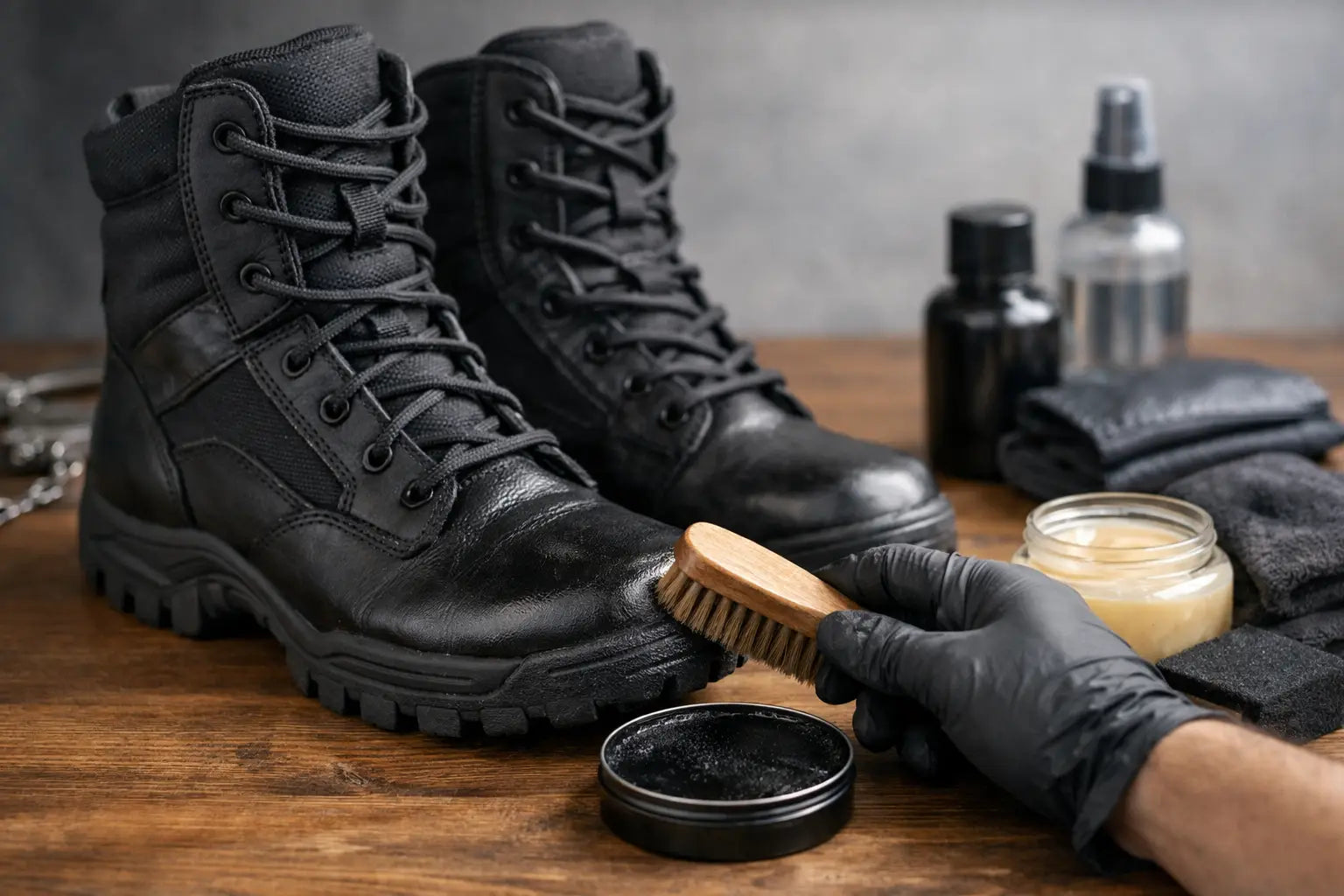
A long shift will expose every weak point in your footwear fast. Wet pavement, heat, vehicle time, stairwells, dirt, oil, and constant movement all add up. If you are wondering how to maintain duty boots so they stay supportive, presentable, and ready for work, the answer is not complicated, but it does require consistency.
Duty boots fail early for predictable reasons. Salt dries out leather. Mud holds moisture against seams. Heat cracks materials and weakens adhesives. Neglected insoles trap odor and break down comfort. Most of the damage that puts boots out of service starts small, then gets expensive.
Why duty boot maintenance matters on the job
For law enforcement, security, corrections, fire, and EMS professionals, boots are not just part of the uniform. They affect traction, ankle support, foot fatigue, and how well you move when things get physical. A boot that looks acceptable from a few feet away can still have a softened heel counter, worn tread, or failing stitching that changes your footing when you need it most.
Regular maintenance also helps you protect the features you paid for. Waterproof liners, polishable toes, slip-resistant outsoles, and full-grain leather all perform better when they are cleaned and treated the right way. Ignore them long enough and even a quality pair will start acting like a budget boot.
How to maintain duty boots without overdoing it
The best maintenance routine is based on use, not on the calendar alone. If you work patrol in wet conditions, your boots need more attention than a pair worn mostly indoors. If you rotate between two pairs, each pair gets more time to dry and recover. That alone can add real life to the boot.
A practical routine usually means a quick post-shift check, a light cleaning as needed during the week, and a more thorough inspection every week or two. You do not need to deep clean after every shift unless you were in heavy mud, bloodborne contamination, standing water, or chemical exposure. Over-cleaning can dry out leather just as badly as neglect.
Start with dry debris and surface dirt
Before you use water or any product, remove loose dirt with a soft brush or cloth. Pay attention to the welt, eyelets, tongue folds, and the area where the outsole meets the upper. Grit trapped in those points acts like sandpaper over time.
If your boots have polishable leather, dry brushing often brings back a cleaner look than people expect. On rough-out, suede, or mixed-material tactical boots, gentle brushing helps preserve the finish without grinding dirt deeper into the fabric.
Clean with the right amount of moisture
Once loose debris is off, use a damp cloth or soft brush with mild soap if needed. The key word is mild. Harsh cleaners can strip protective finishes, dry the leather, and damage adhesives. For most duty boots, lukewarm water and a small amount of boot-safe cleaner is enough.
Do not soak the boots unless the manufacturer specifically allows it for decontamination. Saturating the upper and interior makes drying slower and can stress stitching and liners. If the boots were exposed to bodily fluids or hazardous material, follow your department or agency protocol first. Appearance matters, but safety and compliance come before cosmetics.
Drying duty boots the right way
One of the biggest mistakes in how to maintain duty boots is using direct heat. Leaving them near a space heater, on top of a vent, or in a hot vehicle may seem efficient, but it can shrink leather, warp soles, and weaken glue. Fast drying is appealing. It is also how good boots get ruined.
Instead, remove the insoles, loosen the laces, open the tongue, and let the boots air dry in a ventilated space. Stuffing them with plain paper can help pull moisture out of the interior. Replace the paper if it gets damp. If you work frequent wet shifts, a boot dryer with gentle, non-damaging airflow can be worth it, but high heat is still the enemy.
Drying time depends on the boot material and how wet it got. Waterproof boots often take longer because the liner keeps moisture in as well as out. That is a trade-off many professionals accept, but it makes boot rotation even more useful.
Conditioning leather without making it soft
If your duty boots use leather, conditioning matters. Leather that gets wet, flexed, and exposed to dirt will eventually dry out. Once it starts cracking around flex points, you are past basic upkeep and into permanent damage.
Apply a leather conditioner made for duty or work boots after cleaning and full drying. Use a light amount and work it in evenly. More product is not better. Too much conditioner can over-soften the leather, reduce structure, and change the appearance of polishable areas.
This is where material matters. Full-grain leather usually benefits from conditioning. Synthetic uppers often do not. Hybrid duty boots may need treatment only on leather panels while the textile sections just need cleaning. If you are unsure, follow the care guidance for that specific boot construction.
Polishing and appearance standards
For uniformed professionals, maintenance is also about presentation. A polished toe and clean upper show attention to detail, but polish should support boot care, not cover neglect. If the leather is caked with dirt or dried out, adding layers of polish only hides the problem for a short time.
Use polish on clean, dry boots. Apply thin coats, especially on high-shine areas like the toe and heel. If your boots have a matte tactical finish or mixed fabric panels, standard polish may not be appropriate. In those cases, focus on cleaning and preserving the finish the boot was built with.
Pay attention to soles, laces, and insoles
Most people think of maintenance as an upper-only job. That misses the parts that fail first during hard use.
Check the outsole tread regularly. If the edges are rounding off, the heel is wearing unevenly, or the slip-resistant pattern is packed with debris, your footing is already changing. For public safety professionals, that is not a small issue. Stairs, wet floors, pavement, and uneven terrain demand consistent traction.
Laces deserve more attention than they get. Frayed laces, bent speed hooks, or eyelets pulling at the upper are early warnings. Replacing a lace is easy. Ignoring it until it breaks during a shift is avoidable.
Insoles also affect the usable life of your boots. If they are flattened, holding odor, or staying damp, replace them. Fresh insoles can restore comfort and help with moisture management, but they are not a fix for a boot that has lost structural support.
When waterproofing helps and when it does not
Some duty boots come waterproof from the factory. Others are water-resistant, and some are neither. Applying a waterproofing treatment can help in the right situation, especially for leather boots exposed to rain and repeated wet conditions.
Still, waterproofing is not universal. The wrong treatment can darken leather, reduce breathability, or interfere with polish. On hot-weather boots, extra water resistance may trap more heat than you want. It depends on your climate, assignment, and the boot design.
If you work in South Florida conditions or other humid environments, breathability matters almost as much as water resistance. A fully sealed boot can feel great in a downpour and miserable on a long, hot shift. Match your maintenance products to your actual use, not just worst-case weather.
Signs it is time to repair or replace
Even the best routine has limits. Maintenance extends service life, but it does not stop wear forever. Watch for cracked leather at flex points, separated soles, exposed stitching failure, compressed midsoles, or a heel counter that no longer holds shape. Those are performance issues, not just cosmetic ones.
If the outsole is worn smooth, the boot twists too easily, or your feet feel more fatigued than usual in a pair that used to feel stable, replacement is probably the smarter call. Trying to stretch another few months out of compromised duty footwear can cost more in discomfort, traction loss, and distraction on the job.
A simple maintenance rhythm that works
If you want a realistic answer to how to maintain duty boots, keep it simple enough to repeat. Brush off dirt after rough shifts. Wipe them down before grime sets in. Dry them slowly. Condition leather when it starts looking thirsty, not every few days. Inspect the soles and hardware before they become a problem. Rotate pairs if your schedule and budget allow.
That approach works because it respects how duty boots are actually used. Public safety professionals do not need a fussy routine. They need one that protects fit, traction, and appearance without wasting time. A well-built pair of boots still has to earn its keep, and regular care is what gives them the best chance to do it.
If your boots carry you through long hours, hard surfaces, and unpredictable conditions, treat maintenance as part of readiness, not an afterthought. A few minutes of attention after the shift can save you from finding the weak spot during the next one.