Cart
0





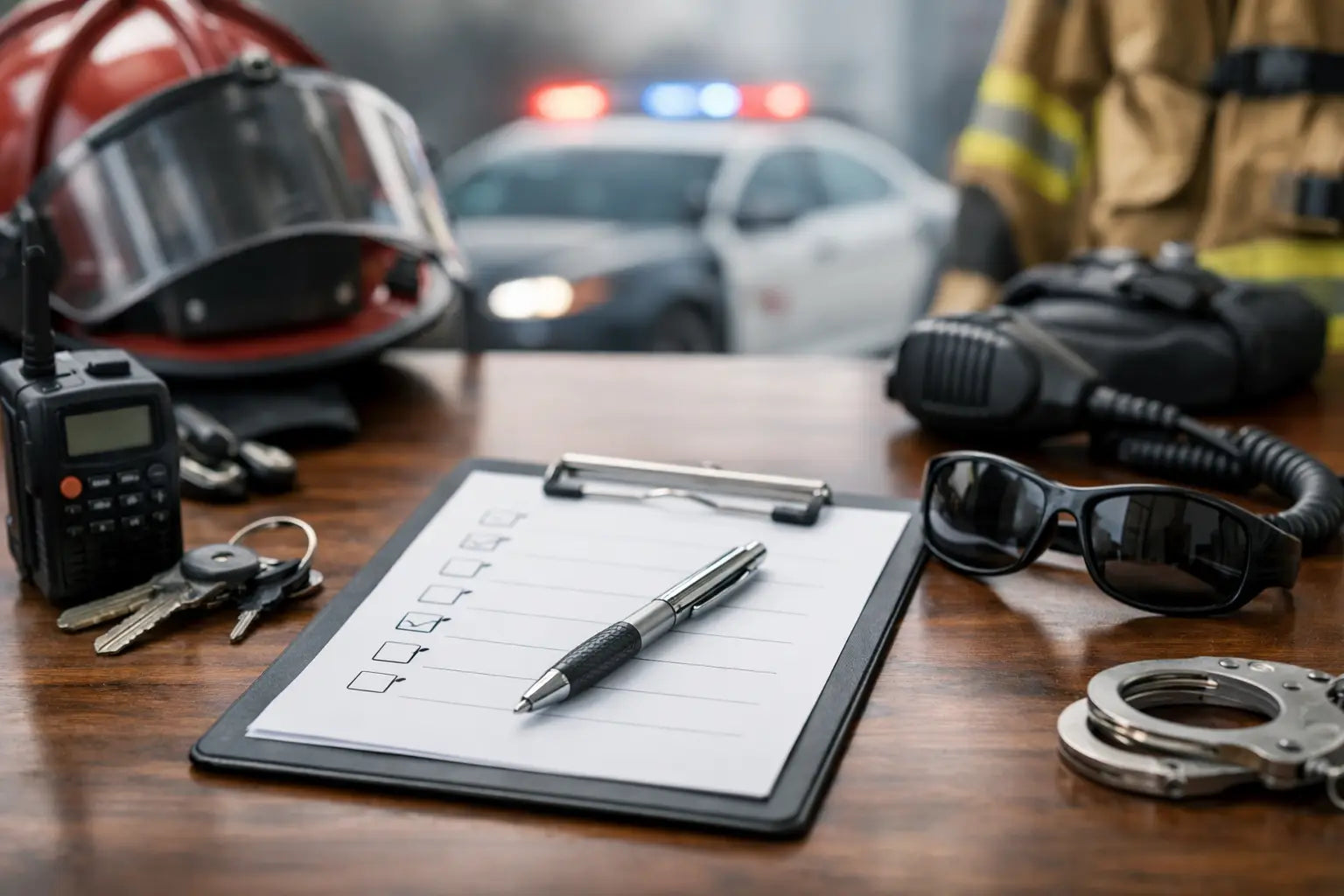
A missed spec on a holster, a delayed armor shipment, or uniforms that fail in the field can turn a routine buy into a costly problem. A strong public safety procurement checklist helps agencies avoid those mistakes before a quote becomes a purchase order. For law enforcement, fire, EMS, corrections, and security teams, the goal is not just to buy gear - it is to buy equipment that holds up on duty, meets policy, and gets delivered when your people need it.
Why a public safety procurement checklist matters
Public safety purchasing is different from standard commercial buying. The end user is working shifts, responding under pressure, and relying on each item for safety, mobility, and performance. That changes the buying standard.
Price still matters, but lowest cost is rarely the full story. A cheaper duty belt that wears out early, a light with unreliable output, or body armor that creates fit issues across a team can increase replacement costs and reduce readiness. Procurement buyers have to balance budget discipline with field performance, compliance, and availability.
That is why a checklist works. It creates a repeatable way to compare products, confirm requirements, and reduce surprises. It also helps procurement teams coordinate with command staff, quartermasters, training personnel, and the officers or responders who will use the gear every day.
Start with mission need, not product hype
Before comparing brands or requesting pricing, define the actual operational requirement. That sounds obvious, but it is where many purchases drift off course. If the need is patrol-ready outer carriers, the checklist should focus on load-bearing capacity, fit range, identification panels, compatibility with issued armor, and policy compliance - not just appearance or catalog features.
This is also where agencies should separate must-haves from preferred features. A must-have could be NIJ compliance, a retention level requirement, or compatibility with existing magazine pouches. A preferred feature could be extra storage, a specific colorway, or premium materials. When everything is treated as essential, comparisons get muddy and lead times get longer.
A practical way to frame this is by asking three questions: What problem are we solving, who is using the gear, and what existing systems does it need to work with? Those answers usually narrow the field fast.
Build the checklist around six buying factors
1. Compliance and policy fit
For public safety equipment, compliance comes first. Depending on the product, that could mean NIJ standards for armor, agency-approved uniform requirements, retention standards for holsters, or local and departmental purchasing rules. If an item is technically well made but does not meet policy, it is not a value buy.
This part of the checklist should also cover documentation. Ask whether product specs, manufacturer certifications, warranty details, and model numbers are clearly available. Procurement gets harder when buyers have to chase basic paperwork.
2. End-user performance in real conditions
Products can look good in a showroom and still fall short on shift. Boots that break down in wet heat, gloves that reduce dexterity, and plate carriers that ride poorly during long wear create issues that a spec sheet will not fully show.
That is why user feedback matters. For larger buys, it often makes sense to put samples in the hands of a small test group before committing to volume. Patrol, SWAT, corrections, fire, and EMS all move differently and carry different loads. One configuration may work well for one unit and create friction for another.
There is a trade-off here. Field testing takes time, and urgent replacement cycles do not always allow a long evaluation period. But when the order is significant or the item affects safety and comfort, a short wear trial can prevent expensive corrections later.
3. Durability and lifecycle value
A public safety procurement checklist should measure expected service life, not just upfront cost. Two products with similar pricing may perform very differently over a year or two of operational use.
Look at material quality, replacement frequency, warranty support, and repair or exchange options. Hard cases, flashlights, restraints, boots, and uniform items all wear differently depending on climate, frequency of use, and assignment. South Florida heat and humidity, for example, can expose weak stitching, low-grade coatings, and poor moisture management quickly.
Lifecycle thinking is especially useful when comparing premium products to budget options. Sometimes the higher-priced item is worth it because it lasts longer and performs more consistently. Other times the premium is paying for features your team will never use. The checklist should force that conversation.
4. Sizing, fit, and standardization
Sizing errors are one of the easiest ways to create waste. Uniforms, footwear, armor carriers, gloves, and belts all need a clear sizing plan. If your agency is outfitting a full team, include fit ranges, gender-specific sizing if needed, and exchange procedures before the order is placed.
Standardization matters too. Buying too many variations across units can make replacements slower and inventory harder to manage. At the same time, over-standardizing can backfire if specialized roles need different features. A patrol division may benefit from consistency, while specialized teams may require more tailored equipment.
The right answer depends on the product category. Standardization usually makes sense for core uniform items and common accessories. More flexibility may be justified for mission-specific loadouts.
5. Supplier reliability and agency support
The product is only part of the purchase. The supplier matters just as much. Public safety buyers should evaluate whether the seller understands agency purchasing, can confirm authorized dealer status, provides accurate lead times, and responds quickly when something changes.
A dependable supplier helps with quoting, backorder visibility, manufacturer communication, and post-sale support. That can be the difference between a smooth rollout and weeks of avoidable delays. If the purchase includes multiple sizes, serialized items, or restricted products, agency sales experience becomes even more valuable.
This is also where buyers should look beyond the initial order. Ask how returns, warranty claims, damaged shipments, and sizing exchanges are handled. Fast support is not a marketing extra in this industry. It is part of operational readiness.
6. Pricing, terms, and total buy structure
Competitive pricing matters, but the cleanest quote is not always the best buy. Review whether pricing includes required accessories, whether freight or handling affects the final cost, and whether substitutions are likely if stock shifts. A low unit price can lose its appeal if the order arrives incomplete or spread across multiple dates without clear communication.
For larger purchases, buyers should also review payment terms, tax-exempt handling where applicable, and whether staggered delivery makes sense. Some agencies need everything at once. Others are better served by phased fulfillment tied to staffing, training dates, or budget release schedules.
How to use the checklist during vendor comparison
Once your requirements are clear, use the checklist to score options consistently. That does not mean every category has equal weight. Body armor and holsters may put more weight on compliance and end-user performance. Uniform basics may lean more heavily on sizing consistency, availability, and price control.
The key is to compare products against the same operational questions. If one vendor provides complete specs, realistic delivery windows, and clear support while another offers only a lower number, the checklist should make that difference visible. Procurement is easier to defend when the buying logic is documented.
For many agencies, it also helps to involve one field supervisor and one end user in the review. Procurement teams see process risk. End users see daily-use risk. You need both views.
Common mistakes the checklist should catch
The best checklist does more than approve products. It catches preventable mistakes. One common issue is buying around a short-term budget number instead of long-term use. Another is assuming brand reputation alone guarantees fit for your agency's needs.
A third mistake is overlooking lead time until the order is already moving. This matters a lot for uniforms, armor, specialized holsters, and custom agency items. If deployment timing matters, availability should be part of the evaluation from the start, not a last-minute question.
Finally, many teams skip user input on items that directly affect comfort and mobility. That may save time up front, but it often shows up later as exchange requests, low adoption, or officers buying their own alternatives.
A practical standard for better buying
A good public safety procurement checklist is not about slowing down the purchase. It is about making sure the gear you approve is duty-ready, policy-compliant, and supportable after the invoice is paid. For agencies that need dependable equipment and responsive agency sales support, working with a specialized outfitter such as AE Tactical can make that process more efficient from quote to delivery.
The right buy is the one your team can trust on shift, not just the one that looked acceptable on paper.