Cart
0





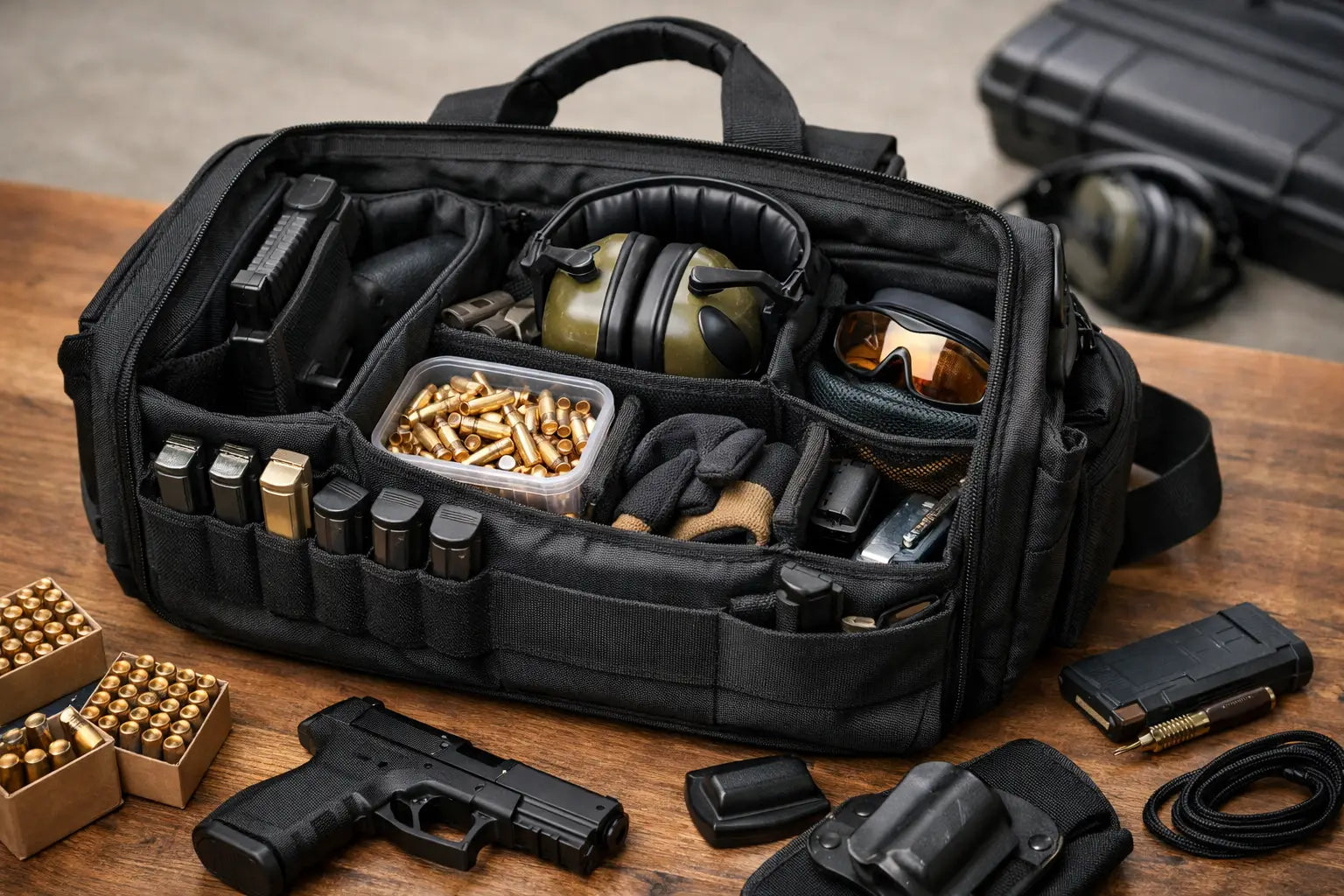
A sloppy range bag costs time when the line is hot and can create avoidable safety issues when you are digging for mags, ear pro, or a chamber flag with one hand. The best range bag organization tips are not about packing more gear. They are about knowing exactly where critical items are, protecting what matters, and cutting out the clutter that slows you down.
For law enforcement, armed security, instructors, and serious civilian shooters, that matters more than convenience. A well-organized bag helps you move from vehicle to bench to cleanup without second-guessing your setup. It also makes post-range inspection easier, which is where a lot of small problems get caught before the next training day.
Start with your actual range mission
The fastest way to ruin a bag setup is to treat every range trip like the same trip. A pistol qualification day, a patrol rifle zero session, and a weekend skills tune-up do not require identical gear. If you pack for every possible scenario every time, your bag gets heavy, crowded, and harder to manage.
Build your organization around what you are there to do. If the session is handgun-focused, keep pistol mags, ammo, timer, target pasters, and support tools in your primary access zones. If you are bringing both pistol and carbine, separate those loadouts by compartment or pouch and commit to that layout every trip. The point is consistency with a purpose, not just neatness.
This is where many shooters overpack. They toss in backup items for backups, then spend half the session moving gear around. A better approach is to define a core kit that always stays in the bag, then add a mission-specific module before you leave.
Use zones instead of random pockets
Good range bag organization tips usually come down to one thing: every category of gear needs a home. Randomly filling pockets works for one trip. It falls apart by the third.
Think in zones. Your top-access area should hold items you may need quickly, such as eye protection, ear protection, gloves, a shot timer, and basic admin items. A main compartment can carry ammo, staple gun or pasters, boxed accessories, and larger support gear. Smaller zip pockets work best for tools, spare batteries, lubrication, and parts that would otherwise disappear into the bottom of the bag.
Magazine storage needs its own logic. Loaded mags should be separated from empty mags, and pistol mags should not mix with rifle mags unless your pouches are clearly divided. If you run multiple calibers or platforms, label internal pouches or use different colors. That one simple step prevents a lot of wasted motion and a few embarrassing moments on the firing line.
Keep ammo controlled, not loose
Loose rounds rolling around in the bottom of a bag are a bad habit. They make inventory harder, increase the chance of contamination from dirt and oil, and slow down reload prep. Keep ammo in boxes, caliber-marked hard containers, or dedicated pouches that stay upright.
If you shoot multiple calibers on the same trip, separation is not optional. It is a safety measure. Mark containers clearly and keep them in fixed locations. For example, handgun ammo always rides left side main compartment, rifle ammo always rides right side. That may sound basic, but consistent placement matters when you are tired, rushed, or training in low light.
Weight distribution matters too. Ammo is usually the heaviest part of the bag, so keep it low and centered if possible. That reduces stress on the bag, prevents awkward carrying, and helps the bag stay upright when set down.
Build a dedicated maintenance pouch
One of the most useful range bag organization tips is to stop scattering maintenance items across different pockets. Your cleaning rod, bore snake, lubricant, multitool, lens cloth, small screwdriver set, and batteries should live together in one dedicated pouch.
That pouch should be easy to remove and easy to inspect. After a range trip, you can restock it in minutes instead of searching the entire bag for what got used. It also keeps oils and solvents from ending up on ear pro, paperwork, or medical gear.
There is a trade-off here. A full maintenance setup can get heavy fast. For most range use, you do not need a bench-level armorer kit. You need enough to handle common stoppages, tighten hardware, clean a dirty optic lens, and do a basic wipe-down before heading home. Pack for the problem set you are likely to face.
Separate medical gear from general tools
If you carry medical gear in your range bag, it should not be buried under ammo and staplers. It should also not be mixed in with random support items where someone else cannot find it. A trauma kit or blowout pouch needs clear placement, external identification if practical, and zero clutter around it.
This matters for solo shooters and group training alike. If another person has to access your med gear, they should not need a tour of your bag to locate it. Keep it in the same position every time, and do not use that pouch for anything else.
The same principle applies to emergency admin items such as a flashlight, phone battery pack, or ID and range documents. Important gear should be immediately identifiable, not just technically inside the bag somewhere.
Keep documents flat and protected
Targets get replaced. Qualification records, ID, permits, training notes, and printed course information should not be crammed between ammo boxes and tools. Use a flat document sleeve or a zip compartment that protects papers from oil, moisture, and bent corners.
If you are an instructor, armorer, or agency user, document control becomes even more important. Keeping score sheets, serial number notes, and maintenance logs in one protected section saves time later. It also gives your bag a more professional workflow. That may not matter to a casual shooter, but it matters when training and accountability overlap.
Clean out the bag on a schedule
Even a good setup breaks down if you never reset it. Trash targets, empty ammo boxes, used batteries, broken pasters, and dead markers pile up fast. The result is a bag that technically has organization, but still feels chaotic.
Make cleanup part of the routine. After each trip, remove trash, restock consumables, wipe down dirty tools, and check what actually got used. That last part is valuable. It shows you what belongs in the bag full time and what has just been taking up space for months.
If you train often, a weekly reset makes sense. If you go less frequently, do it immediately after each trip while the details are still fresh. Waiting until the next range day usually means something critical gets missed.
Label more than you think you need to
A range bag used by one person can still benefit from labels. Once you add multiple firearms, calibers, optics batteries, spare parts, and support gear, visual confirmation gets faster than memory. Small labels on pouches or inside compartments can save time every single session.
This is especially useful for shared team gear, instructor bags, or anyone who runs similar-looking magazines and accessories across different platforms. A label that says pistol tools, rifle batteries, med, or 9mm mags keeps the system honest.
You do not need to turn the bag into a checklist on fabric. Just label the things that are easy to confuse or costly to misplace.
Match the bag size to the loadout
Some shooters try to solve organization with a bigger bag. Sometimes that works. Often it just creates more dead space where gear shifts around and gets lost. The better move is choosing a bag size that matches your normal use.
If most trips are one handgun, a few mags, ammo, ear pro, and a small tool kit, a giant duffel is probably the wrong answer. If you regularly run multiple platforms, carry admin gear, and support other shooters, a larger compartmented bag or hard case system may be the right call. It depends on your role and how much equipment you actually need to move.
The key is control. A properly sized bag makes it easier to assign zones, protect gear, and keep weight manageable. That is a better result than carrying extra capacity you fill with items you never touch.
Make setup repeatable
The best organization system is the one you can maintain without thinking about it. If your ear pro always goes in the same pocket, your loaded mags always ride in the same pouch, and your maintenance kit always lives in the same removable case, setup becomes automatic. So does teardown.
That repeatability is what keeps a range bag useful under pressure, after long shifts, or during back-to-back training days. It reduces decision fatigue and helps you spot missing gear before you leave home.
For shooters who take readiness seriously, organization is not cosmetic. It is part of gear discipline. Pack with a plan, keep the layout consistent, and your bag will work like the rest of your equipment should - ready when you need it.