Cart
0





A vest can look fine on the outside and still be past its safe service life. That is why the question of when should body armor be replaced matters for every officer, security professional, EMS responder, and civilian owner who relies on protective gear to perform as expected.
Body armor is not a buy-it-once item. It is a life-saving system made of materials that age, break down under stress, and lose performance after years of wear, heat, moisture, and repeated handling. The exact replacement timeline depends on the armor type, how often it is worn, how it is stored, and whether it has taken any damage. But one rule stays the same: if you have doubts about the condition of your armor, treat that as an equipment issue, not a cosmetic one.
When should body armor be replaced based on age?
For most soft body armor, the common benchmark is around five years from the manufacturer date, not the purchase date. That five-year window is widely used because the ballistic materials, stitching, carrier components, and protective integrity can all degrade over time, even with decent care.
That does not mean every vest becomes useless the day it turns five years old. It means the manufacturer is typically standing behind its tested performance for that service life. In duty use, especially in hot and humid environments like South Florida, daily wear can put more strain on armor than occasional use in a cooler climate. Sweat, body oils, repeated flexing, and vehicle heat all add up.
Hard armor follows a similar principle, but the replacement timeline can vary more by material and construction. Ceramic, polyethylene, and steel plates all have different durability profiles. Some plates may carry five-year warranties, while others are rated longer. The correct answer always starts with the manufacturer label and documentation.
If you do not know the manufacture date, or the label is missing, you should treat the armor cautiously. Unknown age is a real problem because there is no reliable way to confirm how much service life remains just by looking at it.
Service life is not the same as actual condition
A vest can be within its warranty period and still need replacement. It can also be older than expected and show fewer signs of wear because it was stored properly and rarely used. That is why age alone is only part of the decision.
The better question is not just when should body armor be replaced. It is also what has this armor been through.
Daily patrol use is hard on soft armor. Sitting in a cruiser for hours compresses panels and creates heat buildup. Repeated donning and doffing stresses seams and carriers. Security professionals working long shifts in sun and humidity may see faster deterioration than someone who wears armor occasionally on the range.
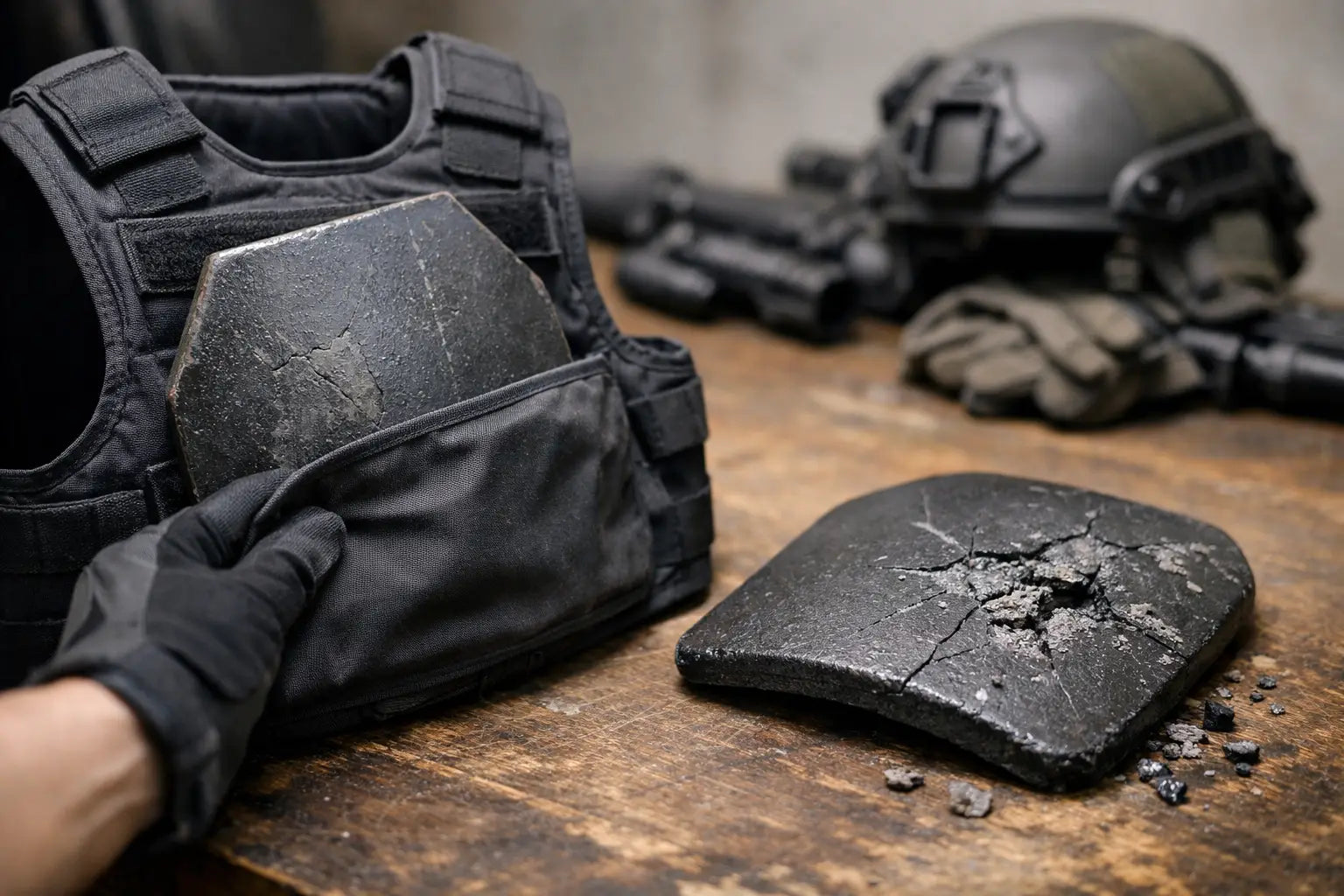
For hard plates, impact history matters just as much as age. A plate that has been dropped, struck, or mishandled may have hidden internal damage, especially if it is ceramic. The outer cover might appear intact while the internal structure has been compromised.
Signs your body armor should be replaced sooner
Some replacement decisions are immediate. If body armor has stopped a round, it should be replaced. That applies even if the armor appears mostly intact. Ballistic events put stress on materials in ways that are not always visible from the outside.
The same goes for stab or spike protection after a significant strike event. Once armor has done its job in a real incident, it should not be trusted as if nothing happened.
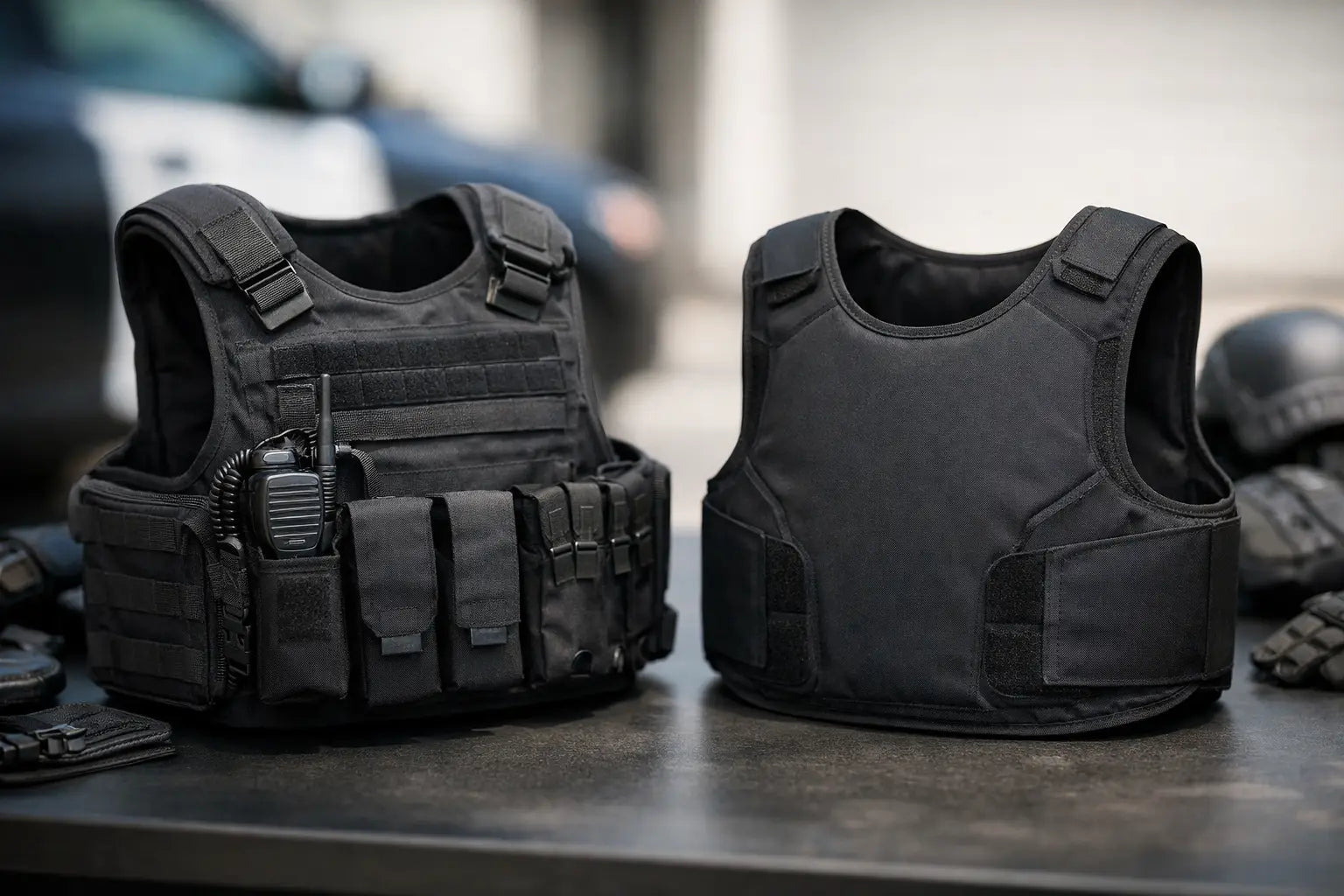
There are also visible warning signs that should not be ignored. Soft armor panels that are creased, warped, or permanently folded may no longer sit correctly or perform as designed. Frayed edges, torn covers, broken stitching, or water intrusion are all signs that the protective package has been compromised. If a carrier is worn out but the ballistic panels are still within service life, replacing the carrier may solve the issue. But if the actual panels show damage, the armor itself needs closer evaluation and likely replacement.
With hard armor, look for cracks, chips, delamination, swelling, loose cover material, or any signs of impact damage. Steel plates can rust if coatings are damaged. Ceramic plates are especially sensitive to drops and blunt impacts during handling. A plate tossed into a trunk day after day is not getting treated like precision protective equipment, even if that is how it is often used.
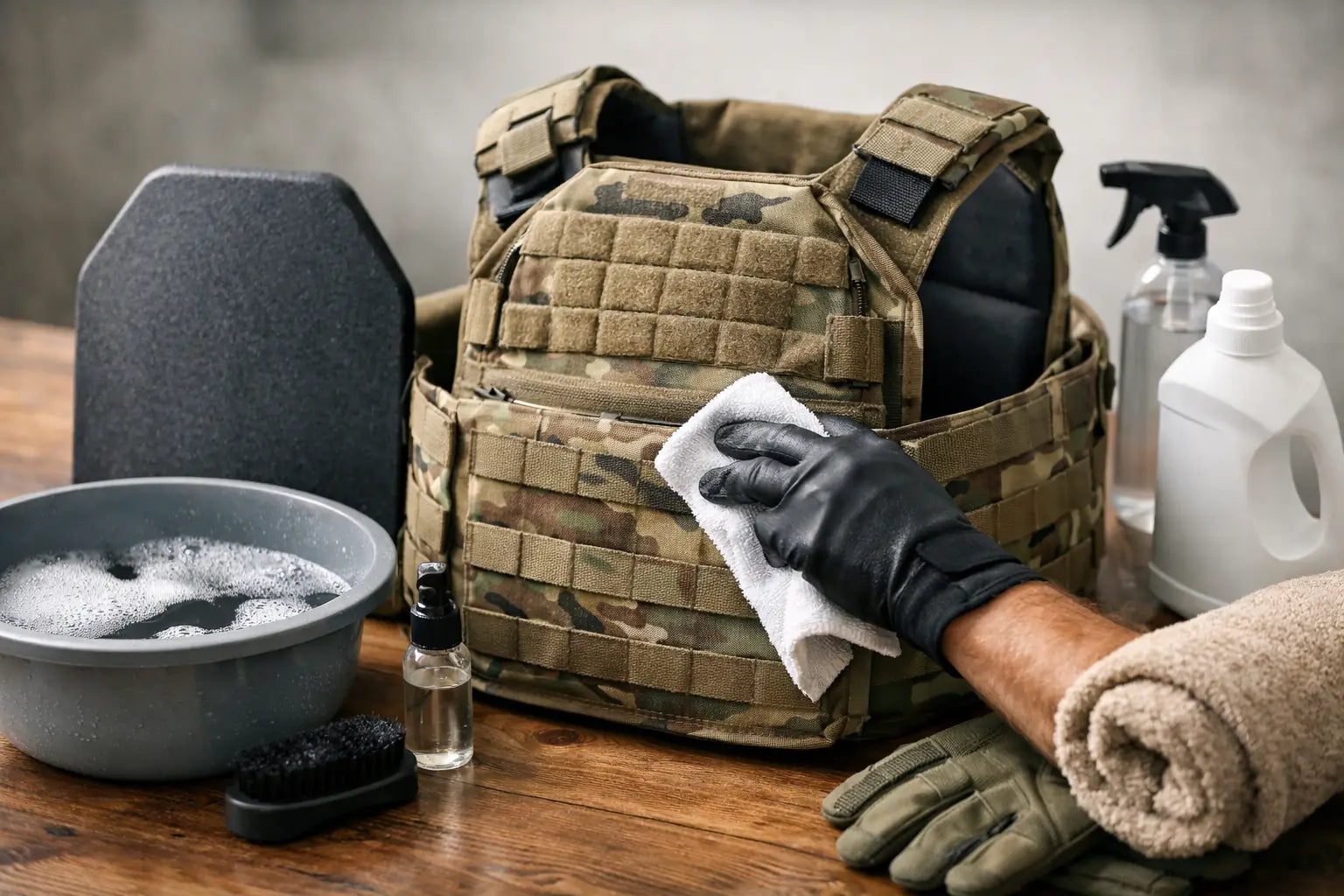
If armor has been exposed to chemicals, petroleum products, bleach, or improper cleaning methods, replacement may also be the safer call. Protective materials are engineered to meet standards under controlled conditions. Once contamination enters the equation, certainty drops fast.
Heat, humidity, and storage conditions matter
Improper storage shortens service life. Leaving body armor in a hot vehicle for long periods is one of the most common examples. Extreme heat can accelerate material breakdown, especially with soft armor. Moisture and humidity can also create long-term issues if armor is not dried and stored correctly.
Body armor should be stored flat or as recommended by the manufacturer, in a cool and dry environment, away from direct sunlight. Folding it, cramming it into a locker, or stacking heavy gear on top of it can damage the shape and structure over time.
This matters more than many users think. Two identical vests issued on the same date may age very differently if one is cleaned properly and stored indoors while the other lives in the back seat of a patrol vehicle through summer heat.
When should hard plates be replaced?
Hard plates deserve their own answer because users often assume they last forever. They do not.
Ceramic and polyethylene plates should be replaced based on manufacturer guidance, visible condition, and any known impact or abuse history. If a plate has taken a ballistic hit, replace it. If it has been dropped hard enough to raise concern, inspect it according to the manufacturer process and replace it if there is any doubt. If the warranty period has passed, that is a strong signal to review your setup rather than wait for obvious failure.
Steel plates are often marketed around long-term durability, but that does not mean they are maintenance-free or ideal for every use case. Coating damage, corrosion, and repeated abuse can still turn a good plate into questionable gear. Replacement timing depends on the plate type, use environment, and condition, not just the calendar.
The fit of the plate carrier matters too. Plates that shift excessively or are carried in damaged carriers may suffer unnecessary wear. Sometimes the issue is not the plate alone but the whole protective system.
Replacement for duty use versus occasional use
A patrol officer, corrections professional, or armed security user should think about body armor differently than a civilian who only wears armor a few times a year. Duty gear sees frequent movement, sweat exposure, and compression. Civilian-owned armor may face less wear, but there is often another problem: long-term storage with little inspection.
Occasional use does not guarantee long life. If armor has sat in poor conditions, if the date is unknown, or if the owner has no idea how it was treated before purchase, replacement may still be the smart decision.
Agency buyers should also think in terms of consistency and liability. If armor is aging out across the fleet, replacing on a planned schedule is more reliable than waiting for individual failures. Staggered replacement programs can help manage budgets, but mixed-age inventory needs tight documentation.
How to know if your armor is still serviceable
Start with the label. Find the manufacturer date, model, threat rating, and care instructions. Then inspect the armor carefully. Check the carrier, stitching, panel shape, cover integrity, and signs of moisture or contamination. For plates, inspect for damage to corners, edges, and outer covering.
Next, think honestly about use history. Has it been worn daily? Left in extreme heat? Dropped? Exposed to rain repeatedly? Cleaned incorrectly? Used in a force event? Those answers matter.
If there is uncertainty, contact the manufacturer or work with a knowledgeable authorized dealer that understands duty gear and armor categories. Guessing is not a good maintenance plan for life-saving equipment.
The cost question most buyers ask
A lot of users stretch armor because replacement is not cheap. That is understandable, especially for self-funded professionals and smaller agencies. But body armor is one of the worst places to push past known service life just to save money.
There is a practical middle ground. Track issue dates, inspect gear regularly, replace worn carriers before they damage panels, and rotate old equipment out before it becomes a liability. Buying the right armor for the job in the first place also helps. Overbuilt gear that is uncomfortable often gets abused, stored badly, or not worn consistently.
At AE Tactical, that is the real conversation worth having with protective equipment. Not just whether it fits the budget, but whether it will still be ready after long shifts, daily wear, and the kind of handling that comes with real field use.
If your body armor is past its service life, has visible damage, or has a history you cannot verify, the safest answer is usually the simplest one: replace it before you need it, not after you wish you had.